Cozy games research agrees on a few things. Cozy games feel safe, give you plenty and keep every sight and sound soft. They work best when they are predictable, and they go wrong when daily tasks turn into chores. Players say these games help them relax and feel better, but no study says they replace real help. Below are eight studies and reports in plain words, each with a free link.
The short answer
Cozy games research agrees that cozy games feel safe, give you plenty and keep sights and sounds soft. The eight studies and reports below, from 2018 to 2025, also find that predictability matters, that chores spoil the feeling, and that players use these games to relax. None of them say a cozy game replaces real help.
In more detail, the works agree on six things:
- Safe, plenty, soft. A cozy game has little danger or loss, your basic needs are met, and its colors, sounds and pace are gentle. Every paper below starts from this idea.
- Predictable. Knowing what comes next is a big part of feeling cozy. Four of the eight works land on this on their own.
- Chores spoil it. Daily quotas, rankings, guilt for being away and losing friends push players out.
- It can hold sad stories. Games about grief can still feel cozy, as long as the play itself stays safe. Not everyone agrees this works.
- The player decides. In the end each player decides what feels cozy to them. Design can only make it more likely.
- It helps, and it has limits. Players say cozy games help them relax and recharge. None of the studies say they replace real help.
What are the main cozy games studies?
The main cozy games studies are one designer report, two player interview studies, four journal articles and one journal editorial, all free to read. Only two of them talked to players, 17 and 11 people. The table sums up each work, and the sections below explain them one by one.
| Work | Year | Type | Size | Main finding | Read free |
|---|---|---|---|---|---|
| Short et al., Coziness in Games | 2018 | Designer group report | Design notes | Coziness is safety, abundance and softness, and any game can have it | Project Horseshoe |
| Yee and Sng, Animal Crossing and COVID-19 | 2022 | Interview study | 17 players | The game met needs for freedom, skill and connection in lockdown | Frontiers |
| Alcocer Ludeñas, Nurturing Well-Being Through Play | 2024 | Master’s thesis | 11 players | Players used cozy games to cope, with short sessions and clear limits | Erasmus University |
| Boudreau, Beyond Aesthetics | 2024 | Journal article | 2 games | Cozy games ask little of you and show hard work as easy | Replay |
| Bódi, The Duality of Cozy Games | 2024 | Theory paper | Theory | Cozy games calm us with routine, and echo the pressure to be productive | Replay |
| Krzywinska et al., Second Homes | 2025 | Journal article | Close reading | Knowing your way around a game feels like home | Oxford ORA |
| de Pan and Bosman, If all is cozy | 2024 | Critical essay | 2 games | If any game can be cozy, the word loses its meaning | Into the Magic Circle |
| Waszkiewicz and Tymińska, Resistance Through Care | 2024 | Journal editorial | Editorial | Coziness comes in three kinds, and rest and care matter in hard times | Replay |
Questions we answer with this research
We wrote five longer posts that each take one question and answer it from these papers:
- Is cozy a genre or a feeling? Four views from designers and scholars, side by side.
- Why do we unwind by working in cozy job games? Bettina Bódi on routine and the pull to be productive.
- How do cozy gamers use cozy games, and when do they stop? Habits and limits from two player studies.
- Why does your favourite game feel like home? Tanya Krzywinska and colleagues on knowing your way around.
- Why do cozy characters never get tired? Kelly Boudreau on the effort cozy games hide.
The eight works are below, oldest idea first. Each section gives the main findings in plain words, who wrote it, and a free link.
1. What makes a game cozy? (Short et al., 2018)
A game feels cozy when it gives a strong sense of safety, abundance and softness. That is the most cited definition of cozy games. It comes from a group report by game designers at the 2017 Project Horseshoe retreat, published in January 2018, and nearly every later paper builds on it.
Who wrote it: Tanya X. Short, Anthony Ordon, Dan Hurd, Chelsea Howe, Jake Forbes, Squirrel Eiserloh, Joshua Diaz and Daniel Cook, with Ron Meiners.
What it found:
- Coziness is “how strongly a game evokes the fantasy of safety, abundance, and softness.” In this view it is a flavor you can add to any game.
- Cozy activities should be opt-in and pleasant in themselves. Rewards from outside the activity, danger, duty and pressure all work against coziness.
- With basic needs met, players have room for higher needs, such as friendship, beauty and getting good at something.
Read it free: Coziness in Games: An Exploration of Safety, Softness, and Satisfied Needs, Project Horseshoe. We walk through it part by part in How to design a cozy game.
2. How did Animal Crossing help players in lockdown? (Yee and Sng, 2022)
Animal Crossing helped players in lockdown by giving them freedom, a sense of skill and a way to stay connected. In a 2022 interview study of 17 Animal Crossing: New Horizons players aged 18 to 34, mostly in Singapore, Andrew Z. H. Yee and Jeremy R. H. Sng found all three needs met, and some ways the game let players down.
The study uses Self-Determination Theory, which says people need freedom, skill and connection. It is peer reviewed and ran during the COVID-19 pandemic.
What it found:
- Freedom: players traveled when they could not, expressed themselves (Pride designs, a memorial) and set their own goals.
- Skill and connection: players took pride in islands that friends visited, kept in touch with family and friends, and made new friends.
- The downside: some players drifted away when daily tasks turned into duties, other players were unkind, or their island felt too hard to improve.
Read it free: Animal Crossing and COVID-19: A Qualitative Study Examining How Video Games Satisfy Basic Psychological Needs During the Pandemic, Andrew Z. H. Yee and Jeremy R. H. Sng, Frontiers in Psychology 13, 2022.
3. Do cozy games help people cope? (Alcocer Ludeñas, 2024)
Players say cozy games help them cope with hard days, for a while. In a 2024 master’s thesis at Erasmus University Rotterdam, Naomi Nadja Alcocer Ludeñas interviewed 11 cozy game players aged 18 to 34. All 11 said they felt calmer after playing, and all 11 said the games support real help without replacing it.
The thesis is not peer reviewed, and the sample is small and made of keen fans. We turn its habits into practical tips in How cozy gamers use cozy games.
What it found:
- Players came for relaxation and easy, pretty games. They also found freedom, happiness and new friends they did not expect.
- They turned to cozy games on hard days and came out feeling “lighter”. The calm sometimes lasted only a while, but some said it helped them see their problems more clearly.
- They used the games with care: short sessions, play after work, and sometimes a pause on very bad days.
Read it free: Nurturing Well-Being Through Play, Naomi Nadja Alcocer Ludeñas, MA thesis, Erasmus University Rotterdam, 2024.
4. Why do cozy games feel easy? (Boudreau, 2024)
Cozy games feel easy because they ask little of you in thinking, hand skill, feelings and dealing with people. Kelly Boudreau, an associate professor of interactive media at Harrisburg University of Science and Technology, found this in a 2024 close study of Animal Crossing: New Horizons and Pode, played through twice each.
What it found:
- Cozy games ask little in all four ways, and they also show their characters’ hard work as easy. Villagers dig and build all day and never get tired. We explain this in Why cozy characters never get tired.
- When a calm look promises an easy game and the game then asks for more, players feel the mismatch. Pode’s hard-to-read puzzle hints are her example.
- Rewards for talking to a set number of villagers a day can turn friendship into a chore, and guilt for being away is a real cost even when the game does not show it.
Read it free: Beyond Aesthetics: Players, Player-Characters and Interactivity-as-Demand in Cozy Games, Kelly Boudreau, Replay 12(1), 2024.
5. Why do cozy games feel productive? (Bódi, 2024)
Cozy games feel productive because they are full of steady, useful-looking work with no pressure attached. Bettina Bódi of Leeds Beckett University argues in a 2024 theory paper that cozy games are both a break from the pressure to be productive and a gentle practice of it. She did not survey players.
What it found:
- Cozy games give people “ontological security”, a sociologist’s term for the calm we get from steady, familiar routines.
- Many open with a tired city worker who escapes to a new life of more work, now slower and more pleasant. We follow this idea in Why we unwind by working.
- Cute things and plants help: they make the world feel smaller and safer, and they invite you to take care of them.
Read it free: The Duality of Cozy Games: Cozy Agency, Neoliberalism, and Affect, Bettina Bódi, Replay 11(1), 2024.
6. Why do games feel like home? (Krzywinska et al., 2025)
Games feel like home when you know your way around them. Tanya Krzywinska, a professor at Falmouth University, and four colleagues argue that a game’s predictability and familiarity are at the heart of coziness. Their 2025 article in Games and Culture reads games the way literary scholars read books, and it does not survey players.
The other authors are Douglas Brown, Minhua Ma, Anton Belinskiy and Kam Bhui, a professor of psychiatry at Oxford. We cover the article in depth in Why your favourite game feels like home.
What it found:
- Coziness comes from the idea of home, and home means most next to what is not home. A cozy home gives an adventure its point.
- Coziness is not only in cozy games. Inns, camps and player houses in role-playing games and online worlds give the same feeling, and for many fans a game world becomes “their fantasy second home”.
- Knowing your way around a game is cozy in itself, like knowing your own house in the dark. A game with poor teaching can feel uncozy, however soft it looks.
Read it free: Coziness in Games: Second Homes, Audiences, and Esthetics, Games and Culture 21(5), 2026 (online 2025).
7. If all is cozy, what isn’t? (de Pan and Bosman, 2024)
If any game can be called cozy, the word stops meaning much. That is the warning in a short 2024 critical essay by Gideon de Pan and Frank G. Bosman in Into the Magic Circle. They test the cozy label on two games about grief, Gris and Spiritfarer, and find it pulls in different directions.
What it found:
- A game gets called cozy by its makers, by players, by its features, or by shared culture, and these often disagree.
- Games about grief like Spiritfarer play safe, but their stories are closer to a counselor’s office than to a cozy room. The soft look may not make the hard talk comfortable.
- Players call games cozy for their colors alone, or make them cozy with easy modes and mods. If any game can be cozy, the word loses its meaning.
Read it free: If all is cozy, what isn’t? Some conceptual problems regarding cozy games, Into the Magic Circle 1(1), 2024. We set this view next to three others in Is cozy a genre or a feeling?
8. Why are cozy games popular now? (Waszkiewicz and Tymińska, 2024)
Cozy games are popular now because hard times make people want games that feel stable and safe. That is the case made by Agata Waszkiewicz (John Paul II Catholic University of Lublin) and Marta Tymińska (University of Gdańsk) in their 2024 editorial opening a special issue on cozy games in Replay, the Polish journal of game studies.
What it found:
- We spot cozy games by their look: pastel colors, round shapes, cute characters and soft music, with no jump scares, timers or competition, and failure that “does not sting”.
- Coziness comes in three kinds: a whole cozy game, a hard story told with cozy looks, and a cozy moment inside a tense game, like a campfire in Dark Souls.
- In hard times, people “no longer long to play a lone hero bound to save the world”. They choose games that feel stable and safe, and rest and care can be a quiet way of pushing back.
Read it free: Cozy Games and Resistance Through Care, Replay 11(1), 2024.
Where does the research disagree?
Cozy games research disagrees on three questions: whether cozy is a genre or a feeling, whether sad stories can be cozy, and whether coins and goals belong in a cozy game. The designers, the scholars and the players in the interview studies each give a slightly different answer.
- Genre or feeling? The Horseshoe designers call coziness a flavor. Krzywinska and colleagues find it in all kinds of games. De Pan and Bosman think the word has grown too wide.
- Do sad stories fit? Waszkiewicz and Tymińska say a safe game can hold a hard story. De Pan and Bosman doubt the soft wrapper always works, and two players in the Alcocer thesis warned that cozy games with dark topics can add stress. We look at these games in Dark cozy games.
- Are coins and goals bad? The Horseshoe report warns against rewards from outside an activity. Players in the Alcocer thesis liked earning coins and small, gentle challenges, as long as nothing was pushy.
How strong is the evidence?
The evidence on cozy games is early and small. Two of the eight works are interview studies, with 17 and 11 players, and they tell you how players feel. They do not measure health. The rest are design notes, theory and close readings of games. None of them is a medical trial.
Together they explain cozy games well, and they agree with each other on the basics. They cannot say a cozy game causes better mental health.
If you are struggling, please talk to a doctor or a helpline. A game can be a kind part of your day, and that is all any of these authors claim. This is not medical advice.
More on cozy games
- What is a cozy game?
- Are cozy games good for you?
- What breaks a cozy game?
- Dark cozy games
- Cozy game glossary
We read these papers while making our own cozy game, A Short Sail.
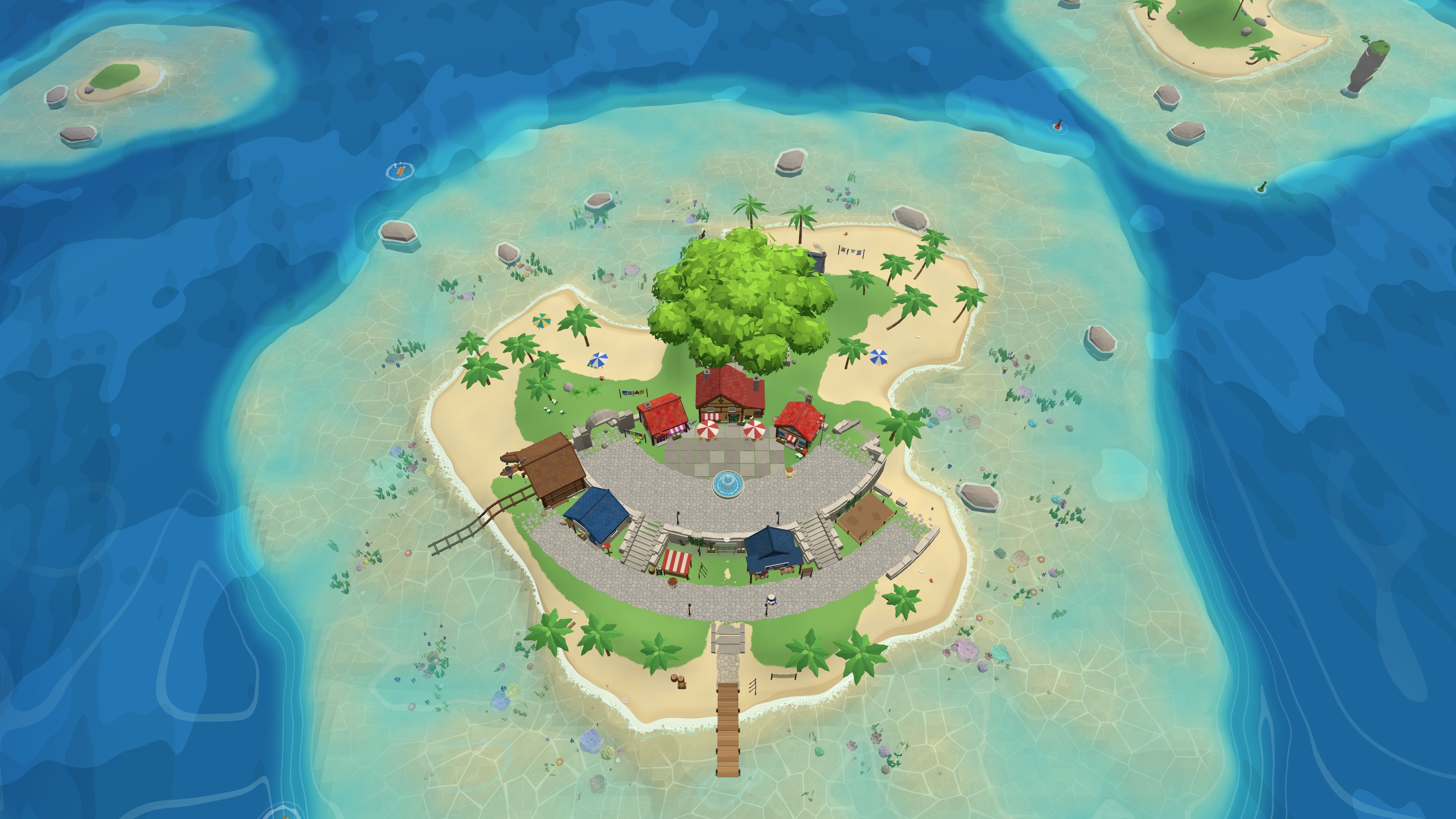
You are a little tabby cat with a sailboat, and the islands need your help. You pick up letters and parcels, pack them into your hold, and deliver them to folks. You fish by day and by night, chat with the islanders and make new friends, and build your home island, one plank at a time.
Questions
What does research say about cozy games?
Studies and reports agree that cozy games feel safe, give you plenty, and keep sights and sounds soft. Interview studies find that players use them to relax and to feel freer and more connected. Writers also warn that daily chores, rankings and pressure can spoil them, and that the word cozy is hard to pin down.
Are cozy games good for your mental health?
Players in two interview studies, with 17 and 11 people, said cozy games helped them relax and feel lighter, and that they felt calmer for a while after playing. The studies are small, and the players themselves said these games support real help but do not replace it. This is not medical advice.
Who defined cozy games?
The most cited definition comes from a group report by game designers at the 2017 Project Horseshoe retreat, led by Tanya X. Short and published in 2018. It says coziness is how strongly a game evokes the fantasy of safety, abundance and softness. Game scholars Agata Waszkiewicz and Martyna Bakun brought it into academic research in 2020.
Is cozy a genre?
Researchers disagree. The Project Horseshoe designers call coziness a flavor you can add to any game. Tanya Krzywinska and colleagues say coziness can be felt in many kinds of games. Gideon de Pan and Frank G. Bosman argue that if any game can be called cozy, the word stops meaning much.
Why do people play cozy games, according to research?
Players in a 2024 interview study named relaxation first, along with easy play and pretty looks. They also found freedom, happiness and new friends they did not expect. Researchers add that steady, familiar routines make people feel safe, and cozy games are full of them.
What can spoil a cozy game?
Daily quotas, rewards that push you to log in, guilt for being away, unkind players and the fear of losing friends all come up in the research. Players in a study of Animal Crossing drifted away when daily tasks turned into duties. A game that looks calm but asks for hard thinking can also feel wrong.
Where can I read cozy games research for free?
All eight works on this page are free online. Most are in open-access journals such as Replay and Frontiers in Psychology, and the Project Horseshoe report is on its own website. The links are in the table and in each section below.