Many players say cozy games help them relax, and a research psychologist, Dr. Rachel Kowert, says the research backs that up: players tie these games to a better mood. But she is clear that cozy games are not therapy. If you want to try the idea for yourself, gentle picks such as A Short Hike, Unpacking, Alba: A Wildlife Adventure, Dorfromantik, and Stardew Valley are a good place to start.
At a glance
| Game | Best for | Length | Platforms |
|---|---|---|---|
| A Short Hike | Anyone who wants one calm, complete evening | About 1.5 hours (HowLongToBeat) | PC, Mac, Linux |
| Unpacking | Players who find calm in putting things in order | About 3.5 hours (HowLongToBeat) | PC, Mac, Linux |
| Alba: A Wildlife Adventure | Players who like nature, photos, and small acts of kindness | About 2.5 hours (HowLongToBeat) | PC |
| Dorfromantik | Puzzle fans who want to think a little, but slowly | About 5 hours for the main goals, with no real end (HowLongToBeat) | PC, Mac |
| Stardew Valley | Players who want a long, gentle life to return to | About 53 hours for the main goals (HowLongToBeat) | PC, Mac, Linux |
| A Short Sail | Players who want a calm game with small, clear goals | Not shared yet | PC (Windows), Mac, Web, Steam Deck |
The short answer
Many players say cozy games help them unwind, and research seems to agree on that point. Dr. Rachel Kowert is a research psychologist who has studied the uses and effects of video games for about 15 years. She told Epic Games Store: “A lot of people in a lot of the research, they do really clearly tie cozy games to positive mental health outcomes.”
She is also careful. Cozy games are a good way to lift your mood, she says, but they are not therapy. We follow her lead here. We report what the sources say, and we make no health claims of our own.
This is not medical advice. If you are struggling, please talk to a doctor or a mental health professional. A game can be a nice part of a hard day. It is not a treatment.
What the psychologist says
Kowert spoke to Dave Tach for Epic’s feature “The Rise of Cozy Games” (24 November 2025). Her work focuses on trust, safety, and the use of video games for mental health. Here is what she said, in four parts.
1. Players know what these games are for
“Like people are aware that these are the games you go to if you want to feel good about life,” she said. In other words, players often pick a cozy game on purpose, as a way to change how they feel.
2. They meet three basic needs
Kowert uses self-determination theory to explain why. It is a theory of human motivation that says people want three things: to feel autonomous and “make our own decisions”, “to achieve something”, and “to feel connected to other people”.
Games are good at all three, she says. Her strongest example is Animal Crossing, because the bond players feel with their villagers “has been well documented”. You choose what to do each day, you finish small goals, and you have neighbors who are glad to see you.
3. Players feel carried somewhere calmer
How do researchers find this out? Kowert says they often use diary studies. People write down how they feel before and after they play. For cozy games, players tend to say they feel relaxed.
She describes it as “a sense of transportation”. Players feel they were “transported to another place where everything is less stressful and everything is kind-of happy and cheery”. “Nobody’s chasing you, and it makes you feel relaxed,” she said. “You can take a breath.”
4. Therapeutic tools, not therapy
This is the part we think matters most. “I think cozy games are a great genre for boosting your mood,” Kowert said. But she draws a clear line. When people talk about “games as therapeutic tools”, she says, cozy games are a great genre to look at. That is “not games as therapy, that’s different”.
She lists what these tools can do: help manage our moods, help us feel connected, and “help us de-stress at the end of a really stressful day”.
One honest note: the Epic article does not name or link the studies Kowert refers to. So we can only report her summary of the research, not the studies themselves.
What the game makers say
The developers in the same feature talk about unwinding more than about health.
- Tobias Schnackenberg of Square Glade Games (Outbound) says many players want to unwind after work: “Sometimes you just want to chill.” He goes a step further than Kowert: “I also believe that cozy games can improve your mental health, because they provide a safe and comforting space to relax in.” That is his belief as a game maker, and he says so.
- Kyle Keersemaker (Cosmic Coop) says: “Cozy games offer a sense of calm that many people crave.” He adds: “Life can be stressful, and games that let you unwind, decorate, and create at your own pace feel like a small escape.”
- Rob and John Donkin of Bad Viking (Strange Horticulture) say cozy games grew fast in the past few years “partly as an antidote to how stressful life can be”.
What the designers found in 2017
Eight years earlier, a group of game designers met at the Project Horseshoe think tank and wrote a report called “Coziness in Games”. Its authors include Tanya X. Short, Daniel Cook, Chelsea Howe, and Jake Forbes. It is a design report, not a medical study. But it gives two useful models for why cozy play can feel good.
Model 1: play as safe practice
The first model says: “People play because it allows them to experiment with a particular set of skills and activities that would otherwise be expensive or impossible in the real world.”
An action game lets you practice fighting with no real danger. A cozy game lets you practice quieter things: being a good neighbor, keeping a home, or making something nice.
Model 2: games meet unmet needs
The second model says: “Players seek to fulfill their emotional and psychological needs within games.”
The report uses Maslow’s hierarchy of needs. At the bottom are urgent needs like hunger, thirst, and safety. When a game makes those urgent, they take all of your attention. The report puts it well: “It is impossible to have a quiet conversation on a difficult subject while being attacked by a bear.”
Cozy games take the bear away. Food and shelter are handled, so there is room for higher needs like friendship, beauty, and growth. The report says: “Cozy games give players space to deal with emotional and social maintenance and growth.”
It also borrows Covey’s time grid. Most games fill your time with things that feel urgent but do not matter much. The report says: “Cozy games are designed to focus the player on Not Urgent yet Important tasks that are unfortunately deprioritized.”
The report links both models to the same self-determination theory Kowert uses: people thrive when they can pursue autonomy, competence, and relatedness.
What research says
Kowert did not name her studies, so we looked for some we could read. Two interview studies ask cozy players how these games fit into their lives. Both are free to read, and both are small. We sum up these two and six other works in our cozy games research guide.
Yee and Sng (2022). Andrew Yee and Jeremy Sng interviewed 17 Animal Crossing: New Horizons players during the pandemic. They were aged 18 to 34, and most lived in Singapore. The study is peer reviewed and appeared in Frontiers in Psychology. It uses the same self-determination theory as Kowert. Players said the game gave them freedom, a sense of skill, and a way to stay close to friends and family when they could not meet. The study also found a downside, which the authors call needs frustration. Some players drifted away when daily tasks turned into duties, when other players were unkind, or when their island felt too hard to improve.
Alcocer Ludeñas (2024). This is a master’s thesis at Erasmus University Rotterdam, with interviews of 11 cozy players aged 18 to 34 (read it free). It is not peer reviewed. All 11 said they turn to cozy games on hard days. Many felt calmer after playing, and one said, “I always feel lighter.” For some, the calm did not last long. All 11 also said cozy games support professional help and do not replace it.
The limits. Each study spoke to a small group of people, once, and asked how they felt. That tells us how players describe these games. It cannot tell us whether a game improves anyone’s health.
What the sources do not say
It is easy to stretch these ideas, so here are the limits.
- No one says cozy games cure anything. Kowert says they can help with mood and stress. She does not say they treat illness.
- Game friends are not real friends. The Horseshoe report says it plainly: “our current weak simulations will never replace real relationships with real people.”
- Cozy is not the same for everyone. A ticking clock or a long to-do list can stress one player and not another. Notice how you feel after you play, not only during.
Five gentle games to try
These are games we think fit the ideas above: low stakes, soft looks and sound, and small goals. We list our honest downside for each one.
A Short Hike
Who it is for: anyone who wants one calm, complete evening.
You are Claire, a young bird, on a holiday at a park. You can climb to the summit, or you can fish, dig, and chat with other hikers. Nothing can hurt you, and the game fits in one sitting. The downside: it is short, and some players wish it lasted longer.
Developer: adamgryu | Year: 2019 | Platforms: PC, Mac, Linux | Length: about 1.5 hours (HowLongToBeat) | Steam: Overwhelmingly Positive | Steam page
Unpacking
Who it is for: players who find calm in putting things in order.
You take objects out of boxes and find a place for each one in a new home. There are no timers, meters, or scores. A quiet story comes through in the objects you unpack. The downside: some players want more to do once the last box is empty.
Developer: Witch Beam | Year: 2021 | Platforms: PC, Mac, Linux | Length: about 3.5 hours (HowLongToBeat) | Steam: Very Positive | Steam page
Alba: A Wildlife Adventure
Who it is for: players who like nature, photos, and small acts of kindness.
Alba is a girl who photographs the wildlife on her island and sets out to protect it. The goals are small and kind, and the island is bright and sunny. It is easy to follow and has no fail state. The downside: the main loop of finding and photographing animals does not change much.
Developer: ustwo games | Year: 2020 | Platforms: PC | Length: about 2.5 hours (HowLongToBeat) | Steam: Overwhelmingly Positive | Steam page
Dorfromantik
Who it is for: puzzle fans who want to think a little, but slowly.
You place hexagon tiles to grow a calm landscape of fields, forests, villages, and rivers. You can stop after a few tiles. A creative mode removes all limits. The downside: if you chase high scores, the calm can turn into pressure.
Developer: Toukana Interactive | Year: 2022 | Platforms: PC, Mac | Length: about 5 hours for the main goals, with no real end (HowLongToBeat) | Steam: Overwhelmingly Positive | Steam page
Stardew Valley
Who it is for: players who want a long, gentle life to return to.
You take over an old farm, grow crops, make friends, and help a small town. It covers all three of Kowert’s needs: your own choices, steady progress, and people who know your name. The downside: the in-game clock and the long to-do list can feel like pressure. Kowert herself says: “I would never say Stardew Valley is easy. That fishing is awful.”
Developer: ConcernedApe | Year: 2016 | Platforms: PC, Mac, Linux | Length: about 53 hours for the main goals (HowLongToBeat) | Steam: Overwhelmingly Positive | Steam page
Our own game
A Short Sail
Who it is for: players who want a calm game with small, clear goals.
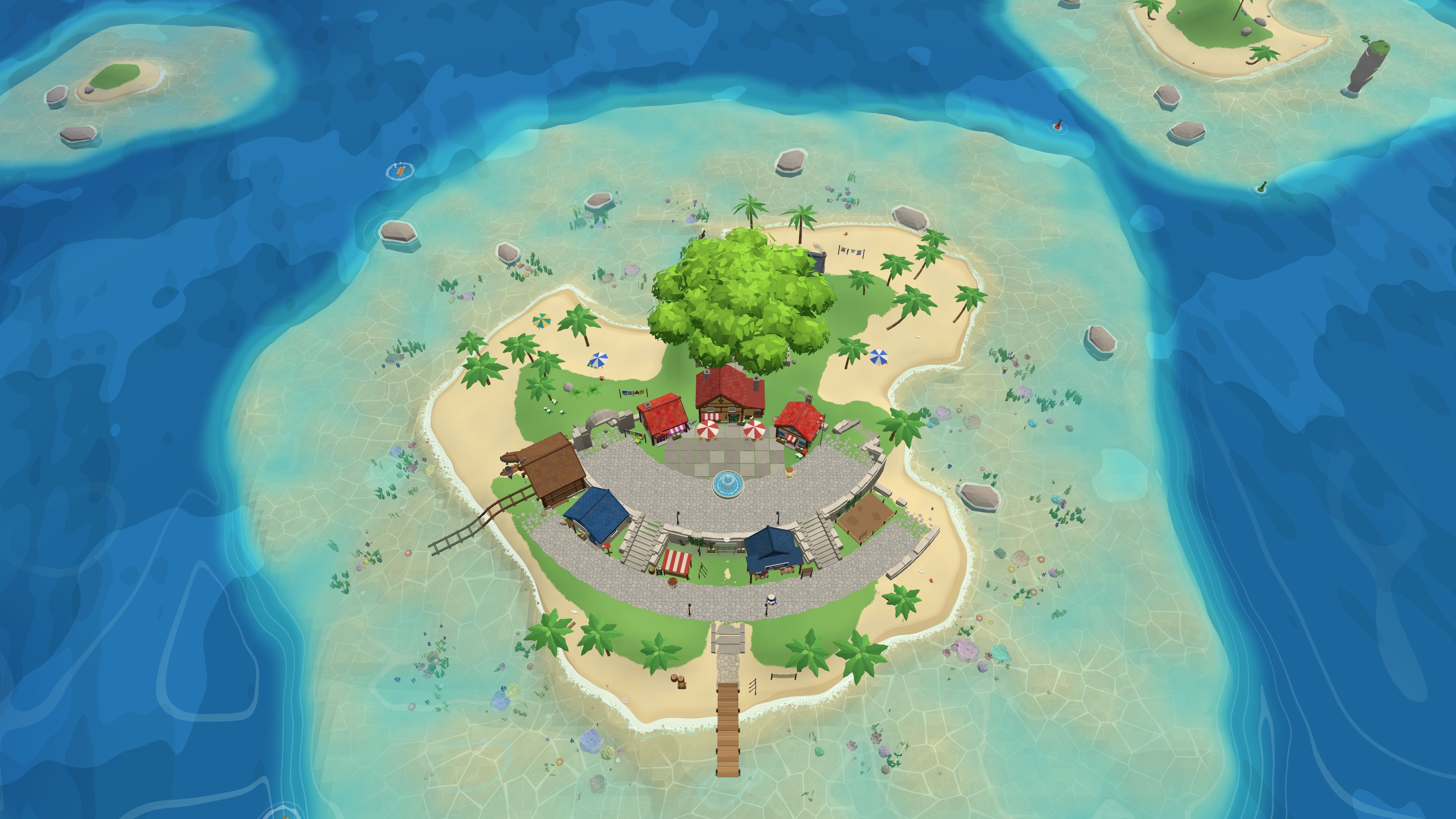
A Short Sail is a cozy sailing game where you are a little tabby cat with a sailboat. Its goals are small: pick up letters and parcels, pack them into your hold, and sail them out to the little islands. You fish by day and by night and make friends with the islanders. There are no timers, so you go at your own pace.
Our honest downside: rain and storms roll in over the sea, and there are gentle sea battles against storms and living waves. There is no fighting on foot. A free demo plays in your browser at play.ashortsail.com.
Developer: Yos Riady | Platforms: PC (Windows), Mac, Web, Steam Deck | Length: not shared yet | Free demo at play.ashortsail.com | Play the demo
Read next
Sources
- Dave Tach, The Rise of Cozy Games, Epic Games Store, 24 November 2025. The source of all quotes from Dr. Rachel Kowert (the research summary, self-determination theory, diary studies, “transportation”, and “therapeutic tools”) and from Tobias Schnackenberg, Kyle Keersemaker, and Rob and John Donkin.
- Tanya X. Short, Daniel Cook, Chelsea Howe, Jake Forbes and others, Coziness in Games: An Exploration of Safety, Softness, and Satisfied Needs, Project Horseshoe 2017, group report section 3. The source of the two models (safe practice and unmet needs), Maslow, the bear, Covey’s grid, and the line about real relationships.
- Andrew Z. H. Yee and Jeremy R. H. Sng, Animal Crossing and COVID-19, Frontiers in Psychology 13, 2022, and Naomi Nadja Alcocer Ludeñas, Nurturing Well-Being Through Play, MA thesis, Erasmus University Rotterdam, 2024. The sources of the two interview studies.
- Game lengths are from HowLongToBeat, and platforms and review ratings are from Steam, checked on 17 October 2026.
Questions
Are cozy games good for your mental health?
Dr. Rachel Kowert told Epic Games Store that many players in the research tie cozy games to positive mental health outcomes. She also says they are not therapy. This post is not medical advice, so talk to a professional if you are struggling.
Why do cozy games feel so relaxing?
Nothing chases you and nothing is urgent. Kowert says players describe a sense of being transported to a calmer place. Game designers add that, with no danger to deal with, you can pay attention to quieter things like friends and making something.
Can cozy games replace real friends or therapy?
No. Kowert separates games as therapy from games as therapeutic tools. The Project Horseshoe designers also say game characters will never replace real relationships with real people.
Which cozy game is best to unwind after work?
Pick something short and soft. A Short Hike takes about 1.5 hours, and Unpacking has no timers or scores. Dorfromantik works in small sessions of a few tiles.
Is there research on cozy games and mental health?
A little. A 2022 peer-reviewed interview study of 17 Animal Crossing players found the game helped them feel free, capable and connected during the pandemic. A 2024 master's thesis with 11 cozy players found they often felt calmer and lighter after playing. Both are small, and neither is a medical trial.
Can cozy games be bad for you?
They can stop feeling good. Players in one 2022 study drifted away from Animal Crossing when daily tasks felt like duties, other players were unkind, or their island felt too hard to improve. If a cozy game starts to feel like a chore, it is fine to take a break.