A cozy game is a video game that feels safe, soft and relaxing, with low stakes, no pressure to win and a gentle look and sound. Good examples are A Short Hike, Unpacking, Spiritfarer and Stardew Valley. We also draw on Epic Games Store's 2025 interviews with cozy game developers and a research psychologist. Platform facts below were checked on 8 October 2026.
At a glance
| Game | Best for | Length | Platforms |
|---|---|---|---|
| A Short Hike | Low stakes: you climb a small mountain at your own pace, and nothing can hurt you | Varies | PC, Mac, Linux |
| Unpacking | No timers, meters or scores: you only unpack boxes and fit things into a home | Varies | PC, Mac, Linux |
| Stardew Valley | Small, kind goals: grow crops, make friends and mend the town at your own speed | Varies | PC, Mac, Linux |
| Spiritfarer | Warm hand-drawn art and music around a gentle story about caring for others | Varies | PC, Mac, Linux |
| Dorfromantik | Your own pace: place tiles to build a landscape, or switch to a creative mode with no limits | Varies | PC, Mac |
| A Short Sail | Players who want to see the six traits in a sailing game | Not shared yet | PC (Windows), Mac, Web, Steam Deck |
The short answer
A cozy game is a video game made to feel safe, soft and relaxing. Danger is low or absent. You lose little or nothing when you fail. The art and sound are warm, and you can play at your own pace.
Cozy is a feeling more than a genre. Researchers at the 2017 Project Horseshoe think tank described coziness as safety, abundance and softness. Safety means there is no threat of loss. Abundance means nothing feels lacking or urgent. Softness means a gentle look, sound and tempo. They also said that cozy is an adjective, so any kind of game can be made cozy.
Dr. Rachel Kowert, a research psychologist, gives the same three parts in plain words in an Epic Games Store feature (Dave Tach, 24 November 2025). Safety is “reliability, familiarity, repetition: you know what’s coming”. Abundance is a game “where the basic needs are provided and easily attainable”. Softness is “gentle, comforting stimuli, good music, something aesthetically pleasing”. Kowert’s example of abundance is Animal Crossing, where trees are already on your island when you arrive.
Developers say it in fewer words. Kyle Keersemaker, who makes Cosmic Coop, told Epic: “It’s less about genre and more about feeling.” Tobias Schnackenberg of Square Glade Games (Outbound) said a game is cozy “when there are no external forces pushing me into a specific direction or stressing me”.
Six traits of a cozy game
Not every cozy game has all six. Most have at least four.
1. Low stakes
Nothing bad can happen that you cannot undo. There is no health bar to lose and no enemy to chase you. The risk is small, so you can relax.
Example: A Short Hike. You are a bird visiting a park, and you climb to the summit at your own pace. Steam says “there’s no need to rush to the summit”. It is about 1.5 hours for the main story (HowLongToBeat). The downside: it is short, so some players want more.
2. No fail state, or a soft one
In a cozy game you rarely see a “game over” screen. If you make a mistake, you try again or carry on.
Example: Unpacking. You pull things out of boxes and place them in a new home. The Steam page promises “no timers, meters or scores”. It is about 3.5 hours for the main story. The downside: the story is told only through objects, and some players want more to do.
3. No timers, or soft timers
Hard countdowns create stress, so many cozy games drop them. Some keep a clock but do not punish you for it. Epic’s feature notes that a self-destruct timer is a common way to add urgency to a game, and that this is “basically anathema” to cozy design. Rob and John Donkin of Bad Viking (Strange Horticulture) say cozy games are “games you can play at your own pace, without timers and pressure”.
Example: Stardew Valley. The in-game day has a clock, but there is no real deadline, and you can ignore most tasks with no penalty. This is the “soft timer” style. It is about 54 hours for the main story. The downside: the clock and the long to-do list can feel like pressure for some players. It also has optional combat in its mines.
4. Warm art and sound
A cozy game uses soft colors, round shapes and calm music. Sound is gentle and does not startle you. Schnackenberg says Outbound uses “a lot of natural ambience, like birds, wind, and the rustling of trees”, with warm tones, gentle lighting, and soft shapes in the art. Zeno Colangelo, art director of Universe for Sale, says coziness comes “through warmth: in light, in sound, in pacing”.
Example: Spiritfarer. The art is hand-drawn and the mood is warm, even though the story is about saying goodbye. It is about 26 hours for the main story. The downside: it deals with death, and the developers advise parental guidance for younger players.
5. Small, kind goals
The goals are small and friendly: grow a plant, help a neighbor, fix a building. Being kind is the usual way forward.
Example: Stardew Valley. You inherit a farm, befriend villagers and help restore the community center. Nothing forces you to do it in a set order.
6. Your own pace
You choose how fast to go, and you can put the game down without losing much. Many cozy games let you stop for the night at any time.
Example: Dorfromantik. You place hexagon tiles to grow a village landscape. It has a score mode for players who want a challenge, and a creative mode with no limits. Main story is about 5 hours (HowLongToBeat), but many players spend far longer. The downside: if you chase the high score, it can stop being relaxing.
Cozy is not the same as easy or short
Cozy describes how a game feels, not how big or simple it is. Spiritfarer takes about 26 hours and is emotionally heavy. Stardew Valley runs to about 54 hours for the main story. Dorfromantik has a harder mode for people who want one.
Cozy also does not mean childish. Some cozy games cover loss, loneliness or change. The mood stays gentle, but the themes can be grown-up.
The Epic feature lists three common misunderstandings, and each one has a good answer:
- “Cozy games are easy.” Kowert says: “I would never say Stardew Valley is easy. That fishing is awful.” Schnackenberg adds that cozy games “can have deep mechanics and progression without stressing the player”.
- “Cozy games are childish.” Rares Cinteza of Gummy Cat (Bear and Breakfast) says people judge them by artwork alone, “sometimes fairly”. Colangelo replies that the best ones “use stillness as a kind of depth”.
- “Cozy games are not really games.” Jenny Windom of Wholesome Games calls this frustrating and says simply: “Cozy games are games.”
Cozy can also sit next to tension. Strange Horticulture is described as “cozy in tone, but with undercurrents of unease”. The Donkin brothers hope to see more games where coziness “can coexist with tension and melancholy”.
Is a cozy game a genre?
Not in the strict sense. Farming sims, puzzle games, adventures and management games can all be cozy. Writers at GamesIndustry.biz describe cozy games as non-violent, helpful and open-ended, with self-expression at the core. Lines vary from person to person. Some players say a game with a timer or combat is not cozy. Others accept a little of both.
Where did cozy games come from?
Developers point to early life sims such as Little Computer People (1985) and Harvest Moon (1996). The Sims (2000) and Animal Crossing (2001) added to the style. The word “cozy” became a common label after Stardew Valley (2016) and Animal Crossing: New Horizons (2020). In 2022, GamesIndustry.biz found that only a handful of the dozens of games called cozy on Steam were released before 2020.
Epic’s feature adds two details. First, the label seems to have grown online, in places like Reddit, where people asked for comfy or cozy games to play when sick. Its name looks borrowed from the “cozy mystery”, a crime story that keeps the blood off the page, as in Agatha Christie’s Murder at the Vicarage. Second, Animal Crossing: New Horizons (20 March 2020) was the fastest-selling Nintendo Switch game of all time at launch. Epic says it pushed the phrase “cozy gaming” further into the mainstream than any earlier game.
Why do people love cozy games?
Kowert links the appeal to self-determination theory: people want to feel autonomous, to achieve something, and to feel connected to others. Cozy games serve all three. Animal Crossing is her strongest example, because the bond players feel with their villagers is “well documented”. A peer-reviewed interview study with 17 Animal Crossing players during the pandemic found the same three needs at work (Yee and Sng, Frontiers in Psychology, 2022). In diary studies, she says, players feel transported to a place “where everything is less stressful”. “Nobody’s chasing you, and it makes you feel relaxed,” she says.
She also warns against overselling it. Cozy games are “a great genre to look at” as therapeutic tools, she says, but they are not therapy.
Developers see the same pull. The Donkin brothers call cozy games “an antidote to how stressful life can be”. Cinteza says a cozy game makes you feel “both safe and engaged”, and that you cannot have one without the other.
What research says
Game scholars study cozy games too. We sum up eight studies and reports, with free links, in our cozy games research guide. Three ideas from them fit here.
Three kinds of cozy. Agata Waszkiewicz and Marta Tymińska opened a special issue on cozy games in the journal Replay in 2024 (read it free). Building on earlier work by Waszkiewicz and Martyna Bakun, they split coziness three ways. Coherent coziness is a cozy look with a cozy story, as in Stardew Valley. Dissonant coziness is a cozy look around a hard story, as in That Dragon, Cancer. Situational coziness is a cozy moment inside a tense game, like the bonfire in Dark Souls. They also list what we spot first: no jump scares, timed events or competition, and failure that “does not sting”.
Predictability. Several papers add a fourth idea to safety, abundance and softness. Tanya Krzywinska and colleagues write in Games and Culture (2025, free version) that “the predictability and reliability of a game’s ludic structure are intrinsic to the experience of coziness”. Bettina Bódi (Replay, 2024, read it free) uses a sociologist’s term, ontological security, for the calm of steady, familiar routines. Both fit Kowert’s “you know what’s coming”.
The critics’ view. Some scholars think the word has grown too wide. Gideon de Pan and Frank G. Bosman, in Into the Magic Circle (2024, read it free), note that players call games cozy for their colors alone, or make them cozy with easy modes and mods. Their essay ends with the line “If (almost) all games can be or can become cozy, none of them are.” Even so, every paper agrees that each player decides in the end what feels cozy to them.
How to choose
- If you want the lowest pressure: A Short Hike or Unpacking.
- If you want a long game to live in: Stardew Valley.
- If you want a story with feeling: Spiritfarer.
- If you want a quiet puzzle: Dorfromantik or Unpacking.
- If you want it short: A Short Hike, about 1.5 hours.
- If you play on Mac: all five games here list Mac support on Steam. Dorfromantik needs an Apple silicon Mac.
Our own game: A Short Sail
A Short Sail
Who it is for: players who want to see the six traits in a sailing game.
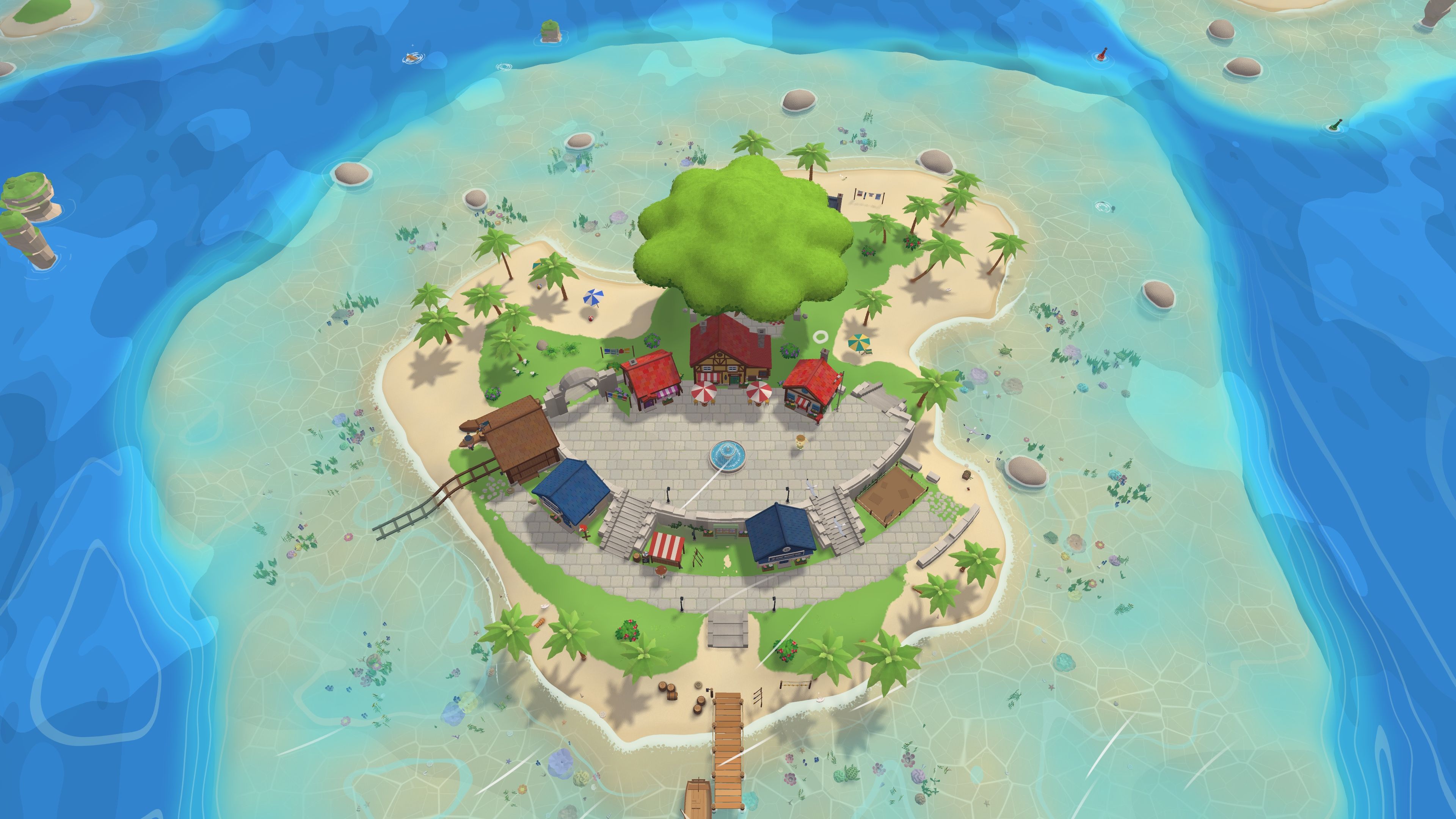
You are a little tabby cat with a sailboat. You deliver mail between little islands, fish by day and by night, and make friends with the islanders. There are no timers, and there is no fighting on foot, only gentle sea battles against storms and living waves. You go at your own pace, alone or online with friends.
Developer: Yos Riady | Platforms: PC (Windows), Mac, Web, Steam Deck | Length: not shared yet | Free demo at play.ashortsail.com | Play the demo
Related guides
- Cozy games with no combat on PC: games where nothing wants to fight you.
- Cozy island games: small worlds to explore.
- Short cozy games for a weekend: if you want a game you can finish.
- Cozy games on Mac: cozy picks that run on a Mac.
- Cozy games on Steam Deck: cozy picks for a handheld.
- Games like A Short Hike: more gentle exploring.
- Relaxing games to play before bed on PC: the calmest picks.
- Cozy PC games for kids: non-violent open worlds.
- Cozy mystery games on PC: gentle cases to solve.
- Cozy games where you fix up a house: renovation and home games.
- Cozy games to play with your partner: games for two.
- Games like Wind Waker on PC: sailing and island quests.
Questions
What is a cozy game?
A cozy game is a video game built to feel safe, soft and relaxing. It has low stakes, little or no fail state, a warm look and sound, and goals that you can take at your own pace. Cozy describes a feeling, not a fixed genre.
Is cozy a genre?
Not in the strict sense. Game designers call cozy an adjective: a flavor that can sit on top of farming sims, puzzle games, adventures and more. Stardew Valley, Unpacking and A Short Hike are all called cozy, and they play very differently.
Can a cozy game have combat?
Yes, a little. Stardew Valley has monsters in its mines, but you can skip them, and nothing in the game punishes you hard. Most players still say a cozy game should keep combat optional and low in stress.
What was the first cozy game?
There is no single answer. Developers point to early life sims such as Little Computer People (1985) and Harvest Moon (1996). The word cozy became common after Stardew Valley (2016) and Animal Crossing: New Horizons (2020).
Why are cozy games popular?
They offer a break from stress. Many people found them at home during 2020, when Animal Crossing: New Horizons and Stardew Valley grew fast. They are also easy to learn, so players who do not want fast reflexes can enjoy them.
Are cozy games easy or short?
Not always. Cozy is about stress, not size. Spiritfarer takes about 26 hours for the main story, and Dorfromantik can hold a hard mode for score chasers. A Short Hike is short, but that is a choice of that game.
What are the three types of cozy games?
Game scholars Agata Waszkiewicz and Martyna Bakun describe three kinds of coziness. Coherent games are cozy in look, play and story, like Stardew Valley. Dissonant games wrap a hard story in a cozy look, like That Dragon, Cancer. Situational coziness is a safe moment inside a tense game, like a bonfire in Dark Souls.
Why do predictable games feel cozy?
Knowing what comes next feels safe. Krzywinska and colleagues (Games and Culture, 2025) compare knowing a game to knowing the way to the bathroom in the dark at home. Players in a 2024 master's thesis also said cozy games give them certainty and comfort.