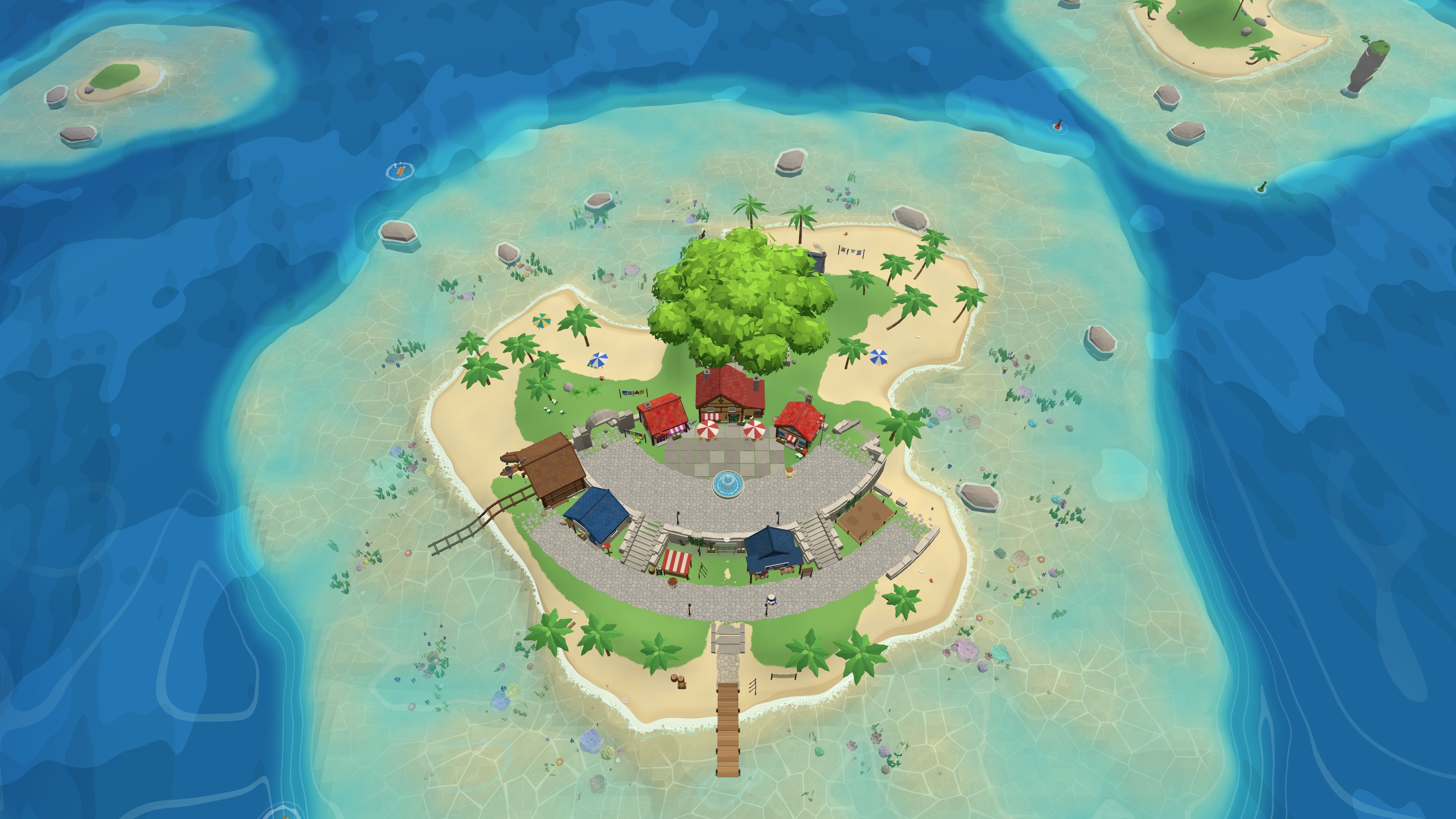
Cozy games come with their own words. A cozy game feels safe and low in stress, a wholesome game is kind in its themes, and a life sim lets you live a daily life in a small world. Below are 43 terms in plain words, each with one example game, so you know what a store page or a friend means.
How to use this glossary
These are the words players, stores and reviewers use for cozy games. Each one has a short definition and one example game. The words are loose: people use them in slightly different ways, and many games fit several at once. For the big picture, start with what is a cozy game.
The big labels
Cozy game
A video game made to feel safe, soft and relaxing, with low stakes, little or no way to fail, and goals you take at your own pace. Cozy is a feeling more than a genre. Example: A Short Hike, where you climb a small mountain and nothing can hurt you.
Wholesome game
A game with kind, positive themes: friendship, care and community, with no cruelty, gore or mean humor. “Cozy” is about how a game feels to play, “wholesome” about what it says, and most games are called both. The curation group Wholesome Games, which runs the Wholesome Direct showcase, made the word common. Example: Kind Words, where you write and receive kind letters from real people.
Comfort game
A game you return to because it makes you feel better, often one you already know well. It is a personal label: any game can be someone’s comfort game. Example: many players replay Stardew Valley’s first spring for comfort.
Cozycore (cozy-core)
A loose word for the cozy look and mood itself: warm lamps, rain on the window, tea, books, soft music. A game can be cozycore in style without being a life sim. Example: Tiny Bookshop, where you run a small secondhand bookshop by the sea.
Cottagecore
A style taken from the cottagecore trend: country cottages, gardens, herbs, baking and handmade things. Example: Wylde Flowers, which describes its farm and witch life as “cottagecore” on its own store page.
Cozy-like
An informal label, built like “roguelike” and “soulslike”, for a game that follows the patterns of a famous cozy hit. You hear “Stardew-like” most: a farm, a town of friends, seasons and festivals. Example: Coral Island, a farm sim set on a tropical island, often compared with Stardew Valley.
Kinds of cozy game
Life sim
Short for life simulation. You live a daily life in a small world: work, decorate, make friends and follow the seasons. There is usually no final goal. Example: Animal Crossing: New Horizons, where you build a life on an island with animal neighbors.
Farm sim (farming sim)
A life sim built around a farm: plant crops, raise animals, sell what you grow and make friends in town. Example: Stardew Valley, the best known modern farm sim. See games like Stardew Valley.
Decorating game
A game where the main joy is arranging a space: furniture, colors, plants, a whole home. Example: Unpacking, where you take things out of boxes and find each one a place in a new home.
Cozy puzzle game
A puzzle game with no timer and no way to lose, where the puzzles are calm and tidy. Example: A Little to the Left, where you sort, stack and straighten household things while a cat makes a mess.
Hidden object game
A game where you search a busy picture for things on a list. The cozy kind is hand-drawn and gentle. Example: Hidden Folks, with its black and white drawn landscapes full of small people to find.
Cozy builder (diorama builder)
A building game with no money, enemies or goals: you build because it looks nice. Example: Tiny Glade, which Steam describes as a “small diorama builder” with “no management, combat or goals”.
Shop sim (management sim)
A game where you run a small business: a shop, a cafe, a bathhouse. Cozy ones keep the pressure low. Example: Tiny Bookshop again, or Calico, where you rebuild a cat cafe. See cozy job games.
Creature collector
A game where you find, raise or befriend creatures. In cozy ones the creatures are friends, not fighters. Example: Ooblets, where little creatures help on your farm and “battle” by dancing.
Narrative game (story game)
A game led by its story, with light play between scenes. Cozy ones are often short. Example: Venba, a cooking game about an Indian family in 1980s Canada, about 1.5 hours long (HowLongToBeat).
Idle game (idler)
A game that plays itself while you are away or busy, and asks only small choices now and then. Example: Rusty’s Retirement, a farm that sits at the bottom of your screen while you do other things.
Desktop companion
An idle game made to sit on your screen beside your work or another game. Example: Rusty’s Retirement again: its store page says it “sits at the bottom of your screen”.
Cozy horror
A calm, gentle loop with a creepy or sad undercurrent. The danger is soft and the mood is the point. Example: DREDGE, a fishing game where strange things live in the deep water. See cozy but dark games.
Cozy mystery
A mystery with no gore and no rush: the clues come to you, and you solve them at your own pace. The name comes from cozy mystery novels. Example: Strange Horticulture, where you run a plant shop and solve an occult mystery. See cozy mystery games.
Cozy MMO and social game
An online game where the main thing to do is hang out with other players. Example: WEBFISHING, which calls itself a “multiplayer chatroom-focused fishing game”. See cozy multiplayer games.
How cozy games play
Low stakes
Little can go wrong, and what does is easy to undo. Example: Townscaper, which its own store page calls “more of a toy than a game”: you build a town with no goals and nothing to lose.
No fail state
You cannot lose. There is no “game over” screen at all. Example: Unpacking, whose store page promises no timers, meters or scores.
Soft fail
You can fail, but the cost is small and you carry on. Example: in Stardew Valley, if you stay up too late you pass out and lose a little money, then wake up the next morning as usual.
No timers (soft timers)
No countdown pushes you. A “soft timer” is a clock that exists but does not punish you much. Example: Stardew Valley’s day has a clock, but almost nothing has a real deadline.
Real-time clock
The game follows the real date and time, so it is night in the game when it is night for you, and some things unlock day by day. Example: Animal Crossing: New Horizons, which runs on your system clock.
Daily cap
The game hands out a set amount of new things each real day, so you play a little each day. Example: Cozy Grove, which unlocks new spirits and tasks over many real days.
Energy (stamina) bar
A meter that empties as you work and refills when you sleep, so each day has a natural end. Example: Stardew Valley’s energy bar.
Friendship hearts
A meter, often drawn as hearts, that fills as you talk to and help the characters. Example: Stardew Valley shows each villager’s friendship in hearts.
Romance option
Some characters can become a partner or a spouse. Many cozy games have it, and some players look for games without it. Example: Stardew Valley lets you date and marry. See cozy games without romance.
Optional combat
There is fighting, but you can skip most of it. Example: Stardew Valley’s mines have monsters, but you can farm for a long time without going in. See cozy games with no combat.
Co-op cozy game
A cozy game you can play together, on the same farm or island. Example: Fae Farm, which its developer calls a farm sim RPG “for 1-4 players”. See cozy games to play with your partner.
Grind
Doing the same small task again and again to earn something. In cozy games it is usually gentle, and many players find it calming. Example: fishing for every fish in a collection, in almost any farm sim.
Words from stores and showcases
The Cozy tag on Steam
A tag that players vote onto games on Steam. On October 29, 2026, 2,847 released games carry it. Example: A Short Hike carries it, while Stardew Valley does not. See cozy games on Steam by the numbers.
Demo
A free first part of a game, to try before you buy. Cozy games often get one for Steam Next Fest. Example: our own A Short Sail has a free demo that plays in the browser. See cozy game demos.
Words from research
These terms come from academic papers on cozy games. Each paper is summed up in plain words, with a free link, in our cozy games research guide.
Coherent coziness
A game that is cozy all the way through: a cozy look, cozy play and a cozy story or theme. Agata Waszkiewicz and Martyna Bakun (2020) say this covers most cozy games. Example: Stardew Valley, which Waszkiewicz and Tymińska (Replay, 2024) give as a coherent cozy game.
Dissonant coziness
A cozy look and gentle play around a hard story, such as grief or illness. The play stays safe while the story hurts. Example: That Dragon, Cancer, about a family raising a terminally ill child. Spiritfarer is often named too. See cozy but dark games.
Situational coziness
A cozy moment inside a game that is not cozy, a safe spot that gives you a rest from danger. Example: the bonfires of Dark Souls, where fire marks a safe haven. See cozy places in games.
Cozification
Calling or making a game cozy after the fact: for its colors alone, or with easy modes, console commands and mods. The word comes from Gideon de Pan and Frank G. Bosman (Into the Magic Circle, 2024). Example: Valheim, a survival game some players make cozy with console commands.
Cozy agency
Bettina Bódi’s term (Replay, 2024) for the kind of control a cozy game gives you. It sits between the drive to beat hard challenges and an idle game where your input barely matters. Example: Animal Crossing: New Horizons, where you shape your island through small, repeated tasks at your own speed.
Ontological security
A term from the sociologist Anthony Giddens for the calm we get from steady, familiar routines. Bódi uses it to explain why gentle, repeated tasks in cozy games feel so soothing. Example: the daily round in Stardew Valley: water the crops, visit town, go to bed.
Interactivity as demand
A model by Nicholas Bowman that rates what a game asks of you in four ways: thinking, hand skill, feelings and other people. Kelly Boudreau (Replay, 2024) uses it to show that cozy games ask little in all four. Example: Pode, a calm-looking puzzle game whose hard-to-read hints ask for more thinking than its look suggests.
Needs frustration
A term from self-determination theory for when a game stops meeting your needs for freedom, skill and connection, and starts to work against them. Andrew Yee and Jeremy Sng (Frontiers in Psychology, 2022) found it in some Animal Crossing players. Example: Animal Crossing: New Horizons, when daily tasks start to feel like duties.
Tend-and-befriend game
An older name for games about caring for things and making friends. Waszkiewicz and Tymińska list it with ambient, slow and wholesome games as earlier names for what we now call cozy. Example: Cozy Grove, where you help friendly ghost bears on a haunted island.
Our own game
We make A Short Sail, a cozy sailing game. You are a tabby cat with a sailboat who delivers mail between little islands, fishes by day and night, makes friends with the islanders, and fixes up an old cottage on its home island. In the words above: it has no timers, no fighting on foot (only gentle sea battles against storms and living waves), and friendships shown as hearts, with no romance for the player. It plays alone or online with friends. It is coming to Steam and itch.io in Q1 2027, and a free demo plays in your browser at play.ashortsail.com.
Related guides
- What is a cozy game?: the full definition, with six traits.
- What breaks a cozy game: the things that ruin the mood.
- Cozy game rating checklist: judge a store page fast.
- How long are cozy games?: HowLongToBeat times for 38 games.
- Cozy games on Steam by the numbers: counts and growth.
- Cozy games for beginners: where to start.
Questions
What does cozy game mean?
A cozy game is a video game made to feel safe, soft and relaxing. It has low stakes, little or no way to fail, warm art and sound, and goals you can take at your own pace. A Short Hike is a classic example.
What does wholesome game mean?
A wholesome game is a game with kind, positive themes and no cruelty, gore or mean humor. It is about what a game says, where cozy is about how it feels to play. Kind Words, where you write kind letters to real people, is a clear example.
What is a life sim?
A life sim, or life simulation game, lets you live a daily life in a small world: you work, decorate a home, make friends and follow the seasons. Animal Crossing: New Horizons is the best known example.
What is a farm sim?
A farm sim, or farming sim, is a life sim built around a farm: you plant crops, raise animals and sell what you grow, while you make friends in a nearby town. Stardew Valley is the best known example.
What is a cottagecore game?
A cottagecore game borrows the cottagecore look: country cottages, gardens, baking, herbs and handmade things. It is a style, not a set of rules. Wylde Flowers describes its own farm and witch life as cottagecore.
What is cozy horror?
Cozy horror mixes a calm, gentle loop with a creepy or sad undercurrent. The danger is soft and the mood is the point. DREDGE, a fishing game with something strange under the water, is the usual example.
What is situational coziness?
It is a cozy moment inside a game that is not cozy overall, such as a bonfire in Dark Souls. The term comes from game scholars Agata Waszkiewicz and Martyna Bakun, who also describe coherent and dissonant coziness.
What is cozification?
It is a word from researchers Gideon de Pan and Frank G. Bosman for calling or making a game cozy after the fact, for its colors alone or with easy modes, console commands and mods. They worry that if any game can be cozy, the word stops meaning much.