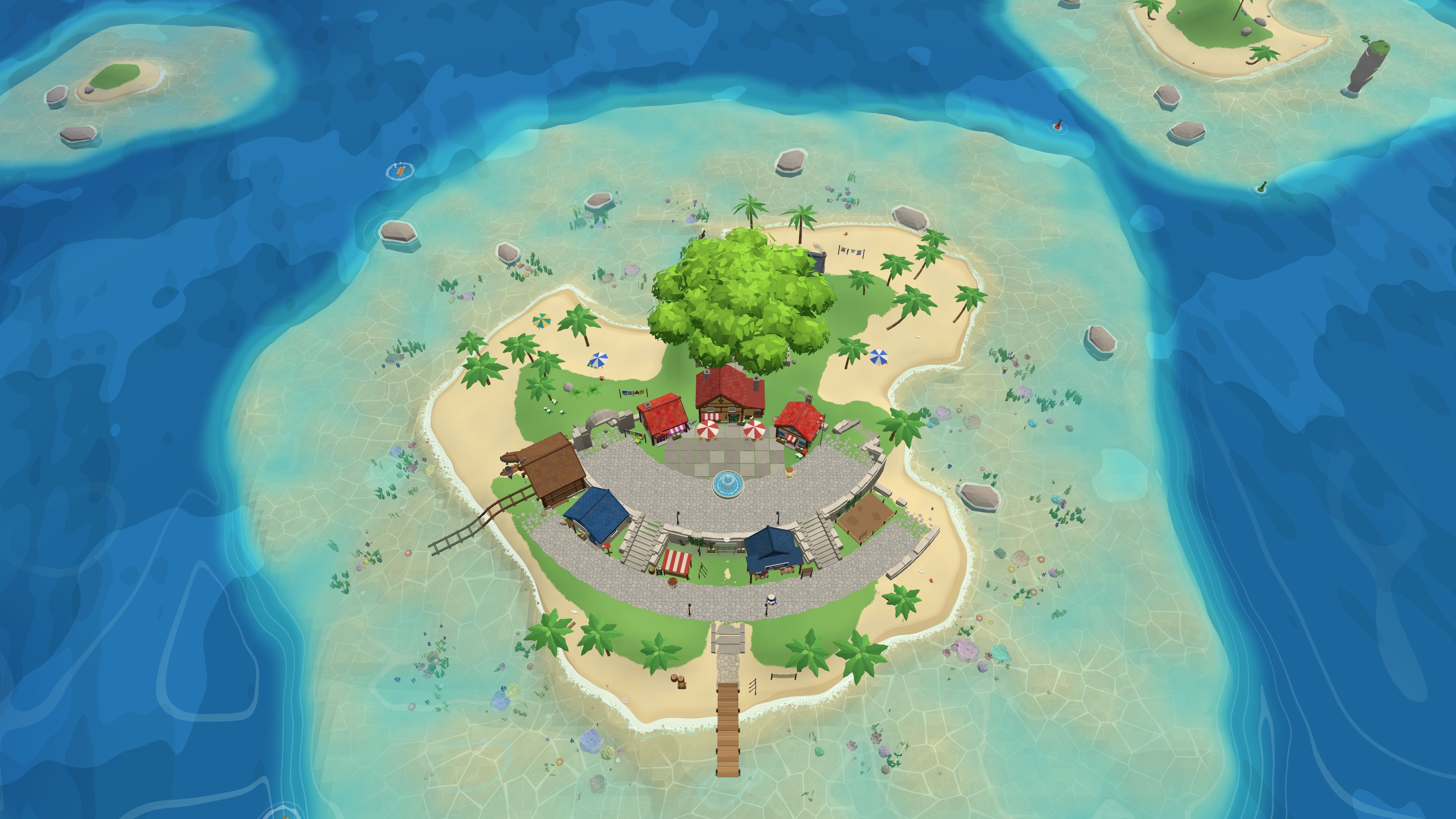
To design a cozy game, make the player feel safe, give them plenty and keep every sight and sound soft. Then make each activity opt-in and good in itself, not a job done for a prize. This guide walks through the cozy design notes that Tanya X. Short of Kitfox Games shared in 2018, part by part, with what we learned from them while we make our own cozy game.
The short answer
A cozy game evokes three feelings. In the words of the Kitfox notes, coziness is “how a game evokes the fantasy of safety, abundance, and softness”:
- Safety: danger and risk are low, whether physical, emotional or social.
- Abundance: your basic needs are met, and nothing is lacking or urgent.
- Softness: sights and sounds are gentle and calm you down.
The three feed each other. When a game has all three, it also tends to feel close and slow, and more sincere. We explain each feeling with an example game in What is a cozy game?
Where these cozy design rules come from
In 2017, a group of game designers met at the Project Horseshoe design retreat and wrote a report on coziness in games. The eight named in the Kitfox post are Jake Forbes, Daniel Cook, Chelsea Howe, Squirrel Eiserloh, Dan Hurd, Anthony Ordon, Joshua Diaz and Tanya X. Short.
On 7 June 2018, Kitfox Games (the studio behind Moon Hunters, Boyfriend Dungeon and Dwarf Fortress on Steam) shared a short version on Medium: Designing for Coziness. Short wrote that players often call Kitfox games warm, and that these rules are part of the reason. The post has five parts: aesthetics, mechanics, narrative, online play and the studio. This guide follows the same order.
Cozy is a flavor, not a genre
The most useful line in the notes is this one: “coziness is an adjective; coziness is an aesthetic goal, a flavor that can be applied to any type of game.”
So there is no single cozy genre. Animal Crossing and Stardew Valley sell coziness as the main dish. Dark Souls and Breath of the Wild are tense games, but they put cozy breaks in certain places and times, such as a bonfire or a stable, so that the danger around them feels easier to bear.
For a designer, this means you can make any game cozier, one part at a time.
What makes a game less cozy
The notes list ten things that work against coziness: extrinsic rewards, danger or threat, responsibility, distractions, strong stimulus, vast distances, social contact you did not agree to, being trapped, deception and opulence.
They also warn that some things only look cozy. Cuteness, romance, wealth, childhood and even home can hide stress. The advice is to check every part of a cozy game for risk, stress, duty, strong stimulus, and for anything that makes the player feel not good enough or afraid.
We go through these one by one, with fixes, in What breaks a cozy game?
Contrast: the rain on the window
Danger is not banned. A threat can make a cozy place feel cozier, if it stays outside. The notes give the clearest picture of this: cold rain against a window makes a reading nook feel warmer. The same rain blowing in through a broken window spoils it.
This is the design rule behind every cozy game with a storm or a dark side: keep a clear safe place, and let the player choose when to step outside it. Six games that use this well are in Dark cozy games.
Cozy aesthetics: look, sound and place
Cozy aesthetics are sights and sounds that feel familiar and remind the player of safety and comfort. The notes list these patterns:
| Pattern | What it means in a game |
|---|---|
| Plenty | Lots of food, drink, warmth and joy, in places like taverns, kitchens, cafés and bedrooms |
| Thresholds | A clear step from bad weather into shelter, like a log cabin in a snowstorm or a cave behind a waterfall |
| Protection | A relaxed guardian animal or character shows the player they are safe |
| Focus | No interruptions or pressures in the space |
| The familiar | Ordinary things feel safer than strange or exotic ones |
| Refuge | If there is an “outside”, this place is clearly a shelter from it |
| Human scale | Rooms and objects are sized for comfort |
| Welcome | The player is invited in, free to be themselves, with no duty to perform |
| Ritual | Repeated actions that mean something |
| Seasons | Familiar turns of the year, often tied to community, especially autumn and winter |
For the look, the notes suggest warm, low-contrast colors and light, natural materials, small enclosed spaces and the odd window onto the world outside. For sound, they suggest diegetic audio where possible: sound that comes from a person or thing in the world, so the player can see where it comes from. We go deeper in Relaxing game soundtracks and Cozy places in games.
Cozy mechanics: opt-in and good in themselves
This is the part game designers ask about most, and the notes are firm. “Coziness is opt-in, depending on player agency.” A cozy activity must also be satisfying in itself, not a step toward progress, status or power. If the reward sits outside the activity, the activity starts to feel like a must, or like a puzzle to solve in the best way.
A mechanic feels cozy only when it is safe, known and relaxing, with no harsh cost, difficulty or danger. Such tasks turn into rituals and hobbies. The notes name six:
- Tidying and organizing
- Searching for or collecting beautiful things
- Fishing
- Reading
- Sewing
- Brewing and drinking tea or coffee
The min-max warning
The notes add a warning that every cozy designer should keep in view: “it is easy for cozy mechanics to devolve as players acclimate to the systems and seek to min/max them.” A calm fishing hobby can turn into a spreadsheet once the player learns which fish pays best.
They also warn that a cozy moment can be used against the player to sell things. Their advice for any game that makes money after launch: serve needs the player already has, and avoid “artificial scarcity or anxiety-inducing social comparison.”
Cozy online play
The notes call the internet “arguably inherently dehumanizing”, so cozy online play takes extra care. Their example is Halo 2, which turned the matchmaking lobby into a virtual sofa where you stayed with the same group from match to match. It was a cozy idea inside a very un-cozy game.
The notes give fourteen tips for cozy social design. In short:
- Fewer strangers, because strangers mean risk and less trust.
- Identities that last, so players behave well.
- Richer ways to talk, so players can show they mean well.
- Norms of trust, where kindness is returned.
- Polite spaces where players agree to what happens.
- A way to forgive and repair after a mistake.
- A code of conduct that players agree to.
- Quick feedback on a behavior, so players can change it.
- Play that rewards good norms such as giving, even with no big prize.
- Layers of social contact that the player opts into, one step at a time.
- Room to stay in a place after the activity there is done.
- Group activities that keep players close without much stress, such as fishing, gathering or crafting.
- Gifts that players find, make or deliver themselves.
- Gentle ways to ask for feedback or say sorry.
For games that already do this well, see Cozy multiplayer games.
Cozy stories and characters
A cozy story is low in pressure and intensity. It has an ensemble cast, no violence, closeness, everyday matters and short episodes. The coziest moments are often a rest: a place called home, a safe spot before or during a storm, or the quiet after the big finish. Think of adventurers sharing food around a campfire before a battle.
Cozy characters are often nurturers. They give food, shelter, company and acceptance. The notes stress that this care is not a trade: “characters help each other because it is nice and gifts expect no reciprocation.” A secret shared, or an invitation into a private space, makes the player feel welcome. A pet that needs little care gives the player someone to be kind to.
Grumpy characters have a place too. The notes say curmudgeons let the player feel for someone, and they make a community feel real, as long as talking to them is the player’s choice. We look at story types in Six cozy stories that feel like home and at grumps in Why we love grumpy neighbors in cozy games.
A cozy studio
The last part of the notes turns to the people who make games. Emotional safety makes honest talk easier, and abundance makes people brave enough to try things. The notes list ten things a cozy workplace would have: chances to change scene, food and coffee, trusted colleagues, natural light and materials, your own choice of music, flexible hours or work from home, shelter from outside pressure, a mentor who is not your manager, time for small groups to mix, and clear, gentle and timely feedback when you ask for it.
They also add two cautions. “You cannot force intimacy.” And where one person has power over another’s career, full coziness is not possible, so trust should never be expected or used to push people.
What research says
The Kitfox notes are design advice. Game scholars have since tested and stretched them, and three findings add to the rules above. We sum up eight of these works in our cozy games research guide.
Match the look to the ask. Kelly Boudreau looked at what Animal Crossing: New Horizons and Pode ask of the player, in a 2024 paper in the journal Replay (read it free). Cozy games, she says, are made so they can be “played almost absentmindedly”. Pode looks calm and soft, but its puzzle hints are hard to read. The calm look sets up an easy game, and the hints ask for more, so players feel a gap between what they expected and what they got. If your game looks cozy, keep what it asks of the player low, or warn them first.
Make spaces predictable. Tanya Krzywinska and colleagues, in Games and Culture (2025, free version), say that “the predictability and reliability of a game’s ludic structure are intrinsic to the experience of coziness”. Knowing where things are in a game is like knowing the way to the bathroom in the dark at home. A game with poor teaching can feel “deeply uncozy”, however soft it looks.
Gentle challenge and coins can help. The notes warn against rewards from outside an activity. Players in a 2024 master’s thesis by Naomi Nadja Alcocer Ludeñas (11 interviews, read it free) pushed back a little. They liked small, low-stakes challenges, such as a swimming contest or hide and seek with a villager. One called this “a gentle challenge that adds a bit of excitement”. Three liked how easy it was to earn money in the game. When a challenge got too hard, though, they wanted to stop, and paying real money to get ahead spoiled the mood.
What we learned while making A Short Sail
We make A Short Sail, a cozy sailing game where you are a little tabby cat with a sailboat. We read these notes as a checklist. Here is how a few of them show up in our game:
- Opt-in rituals. Delivering mail and fishing are the daily rituals. Different fish bite in different waters and at different hours, so a night trip with the lantern lit is its own small hobby.
- Contrast you choose. Rain and storms roll in over the sea, and there are only gentle sea battles against storms and living waves. There is no fighting on foot, so the islands stay a safe place.
- No clock on your back. There are no timers, so you go at your own pace.
- Friends, not a trade. The islanders become your friends, shown as hearts, and there is no romance or dating.
- Diegetic music. You can find instruments and tunes and play them yourself, and islanders may join in as a little band.
- Fewer strangers online. You can join a lobby by a friend’s code, ride along in a friend’s boat and chat. Public lobbies are there for those who want them.
The notes also showed us where we still have work to do, and we keep coming back to the min-max warning each time we add a new reward.
Sources
- Kitfox Games (Tanya X. Short), Designing for Coziness, Medium, 7 June 2018. The source of every quote, list and example in this guide, apart from “What research says”.
- Tanya X. Short, Daniel Cook, Chelsea Howe, Jake Forbes and others, Coziness in Games: An Exploration of Safety, Softness, and Satisfied Needs, Project Horseshoe 2017. The full report that the Kitfox post sums up.
- Kelly Boudreau, Beyond Aesthetics, Replay 12(1), 2024; Tanya Krzywinska and others, Coziness in Games: Second Homes, Audiences, and Esthetics, Games and Culture, 2025; Naomi Nadja Alcocer Ludeñas, Nurturing Well-Being Through Play, MA thesis, Erasmus University Rotterdam, 2024. The sources of “What research says”.
Questions
How do you make a game feel cozy?
Give the player safety, abundance and softness. Take away danger and loss, make sure nothing they need is lacking or urgent, and keep colors, light, sound and pace gentle. Then let the player choose what to do, and make each activity pleasant on its own.
What are cozy game mechanics?
Cozy mechanics are activities that are safe, familiar and relaxing, and that feel good in themselves. The Kitfox notes name tidying, collecting beautiful things, fishing, reading, sewing and brewing tea or coffee. Done again and again, they become small rituals.
Can a game with combat be cozy?
Parts of it can. The Kitfox notes say coziness is an adjective, a flavor you can add to any game. Dark Souls and Breath of the Wild are not cozy games, but their bonfires and stables are cozy breaks between dangers.
How do you make online multiplayer cozy?
Cut down on strangers, keep identities that last, give players richer ways to show they mean well, and let them say sorry. Group activities that keep players close without much stress, such as fishing or gathering, help. So does letting players stay in a place after the activity there is done.
Where does the safety, abundance and softness idea come from?
From a 2017 group report by game designers at the Project Horseshoe retreat, including Tanya X. Short, Daniel Cook, Chelsea Howe and Jake Forbes. Kitfox Games published a short version of it on Medium in June 2018.
Should a cozy game have any challenge?
A little can help. Players in a 2024 interview study liked small, optional challenges, such as a swimming contest or hide and seek with a villager, that added a bit of excitement. When a challenge got too hard, they wanted to stop playing.
Why does a cozy-looking game sometimes feel stressful?
The look may promise less than the game asks. Game scholar Kelly Boudreau found that Pode looks calm and soft, but its hard-to-read puzzle hints ask for more thinking than the look suggests. Players feel that gap.