A grumpy neighbor makes a cozy town feel real, and it gives you a chance to be kind to someone who does not make it easy. The best examples are George and Shane in Stardew Valley, Bruce and Mickey in Spiritfarer, Captain Snout in Cozy Grove, and the cranky villagers of Animal Crossing. Below we explain why they work, using a 2017 game design report on coziness.
At a glance
| Game | Best for | Length | Platforms |
|---|---|---|---|
| Stardew Valley | Players who want a whole town of neighbors to win over slowly | About 53 hours for the main goals (HowLongToBeat) | PC, Mac, Linux |
| Spiritfarer | Players who want caring for others to be the whole game | About 25 hours for the main story (HowLongToBeat) | PC, Mac, Linux |
| Cozy Grove | Players who like a little every day, for a long time | About 73 hours for the main story across many days (HowLongToBeat) | PC |
| A Short Hike | Anyone who wants warm characters in one short evening | About 1.5 hours (HowLongToBeat) | PC, Mac, Linux |
| A Short Sail | Players who want islanders with lives of their own, met on their own terms | Not shared yet | PC (Windows), Mac, Web, Steam Deck |
The short answer
A cozy town with only sweet people in it feels a little fake. One grump fixes that. They make the town feel lived in, and they give you a reason to be patient and kind.
This is not only our opinion. In 2017, a group of game designers at the Project Horseshoe think tank wrote a report called “Coziness in Games”. Its authors include Tanya X. Short, Daniel Cook, Chelsea Howe, and Jake Forbes. One section, “Patterns of cozy characters”, explains what makes a game character feel cozy. The grumps get their own place in it.
The report says characters “should exemplify or facilitate the cozy virtues of safety, softness and satisfied needs”. Here are the patterns it describes, and the games that show them best.
Pattern 1: tend and befriend
Most cozy characters look after you. The report says: “Cozy characters embody the tend and befriend response, offering players a support and respite from outside stress.” They are bartenders, innkeepers, librarians, farmers, and grandmothers. “More simply, characters reassure the player that they are loved.”
The report adds that care feels best when it is free. “In the cozy fantasy, we help each other because it is the nice thing to do. Favors and gifts are cozy; obligation and neediness are not.” One example it gives: “Characters in Stardew Valley sending you recipes in the mail to show gratitude”.
Pattern 2: pets and pariahs
Some characters are there for you to look after, up to and including actual pets. But the report also makes room for the opposite:
“Conversely, curmudgeons and even pariahs have an important place in cozy games, offering the player the ability to signal empathy. These antisocial characters give a community authenticity; like a patchwork quilt, mismatched scraps add to the charm.”
We love that picture. A quilt made from one perfect fabric is just a blanket. The odd square is what makes it yours.
The report’s example of this is “Cranky villagers in Animal crossing keeping things grounded”. Animal Crossing gives some of its villagers a cranky personality. They grumble and act tough. Next to the cheerful villagers, they make the island feel more like a real place.
Pattern 3: intimacy, authenticity, and lives of their own
The report asks for characters who feel real more than characters who are complicated. “In crafting cozy characters, authenticity is more important than complexity.”
They should also have their own business. “Simple interactions should reinforce that the characters have their own inner lives separate from the player’s agenda.” And: “It is comforting to know that within a community, life goes on independent of the player’s agency.” Its examples include KK Slider passing through town and Oscar the Grouch.
Small signs of trust go a long way, too. “Gestures of trust, like sharing a secret or inviting a player into a private space, are especially powerful at making the player feel welcome.” This is why a grump who finally opens up feels like such a reward.
Pattern 4: brevity and consent
Two short lines explain why a grump does not ruin the mood:
- “Brevity is a virtue as it puts less pressure on the player to know everything about a character.”
- “What makes grumpy characters tolerable and even charming is the opt-in nature of engaging with them.”
A grump in a cozy game never follows you around. You choose to knock on their door. If they are rude today, you can walk away and come back tomorrow.
Pattern 5: authority with its guard down
Last, the report says a cozy setting “allows otherwise threatening authority figures, like a boss, a cop, or royalty, to expose their humanity.” It sums this up as “Coziness is a shortcut to empathy.” Its example is Calcifer in Howl’s Moving Castle: “grumpy, judgmental, and initially fearsome”, until moments of weakness make him “a beloved member of the household”.
Four games with great grumps, and ours
These games show the patterns above well. Each one has an honest downside.
Stardew Valley
Who it is for: players who want a whole town of neighbors to win over slowly.
George is a retired man who lives with his wife Evelyn and grandson Alex. His first words to you are: “Hmmph… It’s irritating to have to meet all these new people, huh? Name’s George, by the way. Now buzz off… Hmmph.” Shane, who works at JojaMart, opens with: “I don’t know you. Why are you talking to me?” Both soften as your friendship grows, and that change is the reward. The downside: the clock and the long to-do list can make it hard to find time for everyone.
Developer: ConcernedApe | Year: 2016 | Platforms: PC, Mac, Linux | Length: about 53 hours for the main goals (HowLongToBeat) | Steam: Overwhelmingly Positive | Steam page
Spiritfarer
Who it is for: players who want caring for others to be the whole game.
You are Stella, a ferrymaster who cooks, builds, and cares for spirits on her boat. Most passengers are sweet. Bruce and Mickey are not: they make near-impossible demands, get angry when Stella falls short, and bully the other spirits. Elena, a strict teacher in life, is hard to please and refuses hugs. Caring for them anyway is the “signal empathy” idea in action. The downside: the game is about death, and some goodbyes hit hard.
Developer: Thunder Lotus | Year: 2020 | Platforms: PC, Mac, Linux | Length: about 25 hours for the main story (HowLongToBeat) | Steam: Very Positive | Steam page
Cozy Grove
Who it is for: players who like a little every day, for a long time.
You are a Spirit Scout on an island of ghost bears. Charlotte Pine, the Ranger Bear, is not thrilled to see you. Captain Billweather Snout, the old ferry captain, is called “An ornery Seagull Bear” on the game’s wiki. Steam says that as you help the ghosts, you bring color and joy back to the island. The downside: it runs in real time, and Steam says it is built for one to two hours of play a day, so it is slow by design. Players who want to binge may get annoyed.
Developer: Spry Fox | Year: 2021 | Platforms: PC | Length: about 73 hours for the main story across many days (HowLongToBeat) | Steam: Very Positive | Steam page
A Short Hike
Who it is for: anyone who wants warm characters in one short evening.
There is no big grump here. We include it as the best example of brevity. You are Claire, a young bird at a park, and the island is full of chatty hikers, kids, and park rangers. Each chat is short, and each character has their own little plan, whether you help or not. The downside: it is short, so you only get a few minutes with each of them.
Developer: adamgryu | Year: 2019 | Platforms: PC, Mac, Linux | Length: about 1.5 hours (HowLongToBeat) | Steam: Overwhelmingly Positive | Steam page
A Short Sail
Who it is for: players who want islanders with lives of their own, met on their own terms.
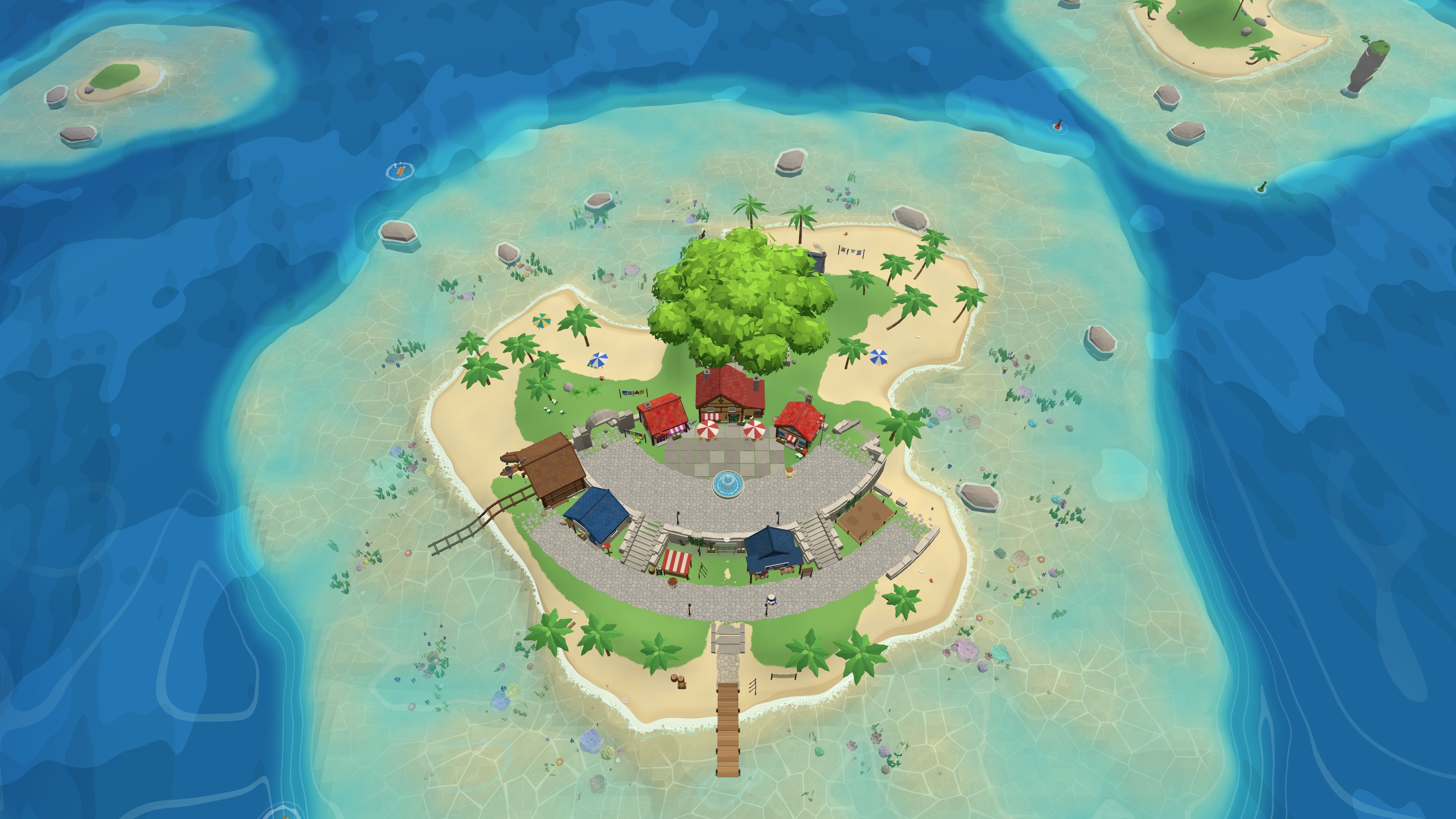
You are a little tabby cat with a sailboat, and you deliver mail between little islands. You help the islanders with their requests and give them rides, and they become your friends, shown as hearts. We use the patterns above when we write them: chats stay short, the islanders have their own lives, and you choose who to visit, and when. There are no timers, and you can play alone or online with friends.
Developer: Yos Riady | Platforms: PC (Windows), Mac, Web, Steam Deck | Length: not shared yet | Free demo at play.ashortsail.com | Play the demo
A note on real people
In its next section, on social play, the report adds a fair warning. Game characters can help us practice friendship, but “our current weak simulations will never replace real relationships with real people.” So if a grump in a game makes you think of a grump in your own street, maybe say hello.
How we use this
We make our own cozy game, A Short Sail. It is in the list above. We use the Horseshoe patterns as a check when we write: keep chats short, let people have their own lives, and let the player choose who to visit, and when.
Read next
Sources
- Tanya X. Short, Daniel Cook, Chelsea Howe, Jake Forbes and others, Coziness in Games: An Exploration of Safety, Softness, and Satisfied Needs, Project Horseshoe 2017, group report section 3. The source of the five character patterns and every quote about them, including the patchwork quilt, the Animal Crossing and Stardew Valley examples, Calcifer, and the line about real relationships.
- Stardew Valley Wiki, George and Shane, checked on 17 October 2026. The source of George’s and Shane’s first lines and their homes and jobs.
- Cozy Grove Wiki, Memories, checked on 17 October 2026. The source of the “ornery Seagull Bear” line and Charlotte Pine’s first reaction. The Cozy Grove Steam page is the source of the color and joy line and the one to two hours of daily play.
- Jennifer Melzer and Beth Cope, How Many Spirits Are In Spiritfarer, and Which One Is the Best, CBR, 11 April 2022. The source of how Bruce and Mickey behave on the boat.
- Noelle Corbett, Spiritfarer: Every Spirit, Ranked, CBR, 1 September 2020. The source of Elena as a strict teacher who refuses hugs.
- Game lengths are from HowLongToBeat, and platforms and review ratings are from Steam, checked on 17 October 2026.
Questions
Why are there grumpy characters in cozy games?
Game designers at Project Horseshoe say curmudgeons give players a way to show empathy. They also make a community feel authentic, like the mismatched scraps that give a patchwork quilt its charm.
Who is the grumpiest villager in Stardew Valley?
Many players would say George. His first words to you end with "Now buzz off... Hmmph." Shane is a close second. Both warm up if you keep visiting.
Does a grumpy character break the cozy feeling?
Not if you can choose when to talk to them. The Horseshoe report says the opt-in nature of a grumpy character is what makes them tolerable and even charming.
Who is the hardest spirit to please in Spiritfarer?
Most players point to Bruce and Mickey. They make demands that are hard to meet and bully the other spirits on the boat. Elena is also hard to please.