A cozy place in a game is small, warm and safe, with something less pleasant outside: rain, a cold night or a dark wood. Good examples are the café in Coffee Talk, the inn in Bear and Breakfast, the rooms in Unpacking, the boat in Spiritfarer, the town in Stardew Valley and the shop in Strange Horticulture. Below, we explain what designers say makes a place cozy, with one game for each kind of place.
At a glance
| Game | Best for | Length | Platforms |
|---|---|---|---|
| Coffee Talk | Players who want a third space: a café at night | About 4.5 hours (HowLongToBeat) | PC, Mac |
| Bear and Breakfast | Players who want a cabin in the woods and the joy of welcoming guests | About 22 hours (HowLongToBeat) | PC |
| Unpacking | Players who love small, familiar rooms | About 3.5 hours (HowLongToBeat) | PC, Mac, Linux |
| Spiritfarer | Players who want a home that travels: a transition space on the water | About 25 hours for the main story (HowLongToBeat) | PC, Mac, Linux |
| Stardew Valley | Players who want a community space and a town that gathers | About 53 hours for the main goals (HowLongToBeat) | PC, Mac, Linux |
| Strange Horticulture | Players who want a refuge, with the danger kept outside | About 6 hours (HowLongToBeat) | PC, Mac |
| A Short Sail | Players who want a home island to come back to after each trip | Not shared yet | PC (Windows), Mac, Web, Steam Deck |
The short answer
A cozy place is somewhere you can stop. It is small enough to know by heart. It is warm, soft and full of familiar things. Nothing in it wants anything from you. And often, there is something less pleasant outside the window, which makes the inside feel even better.
In 2017, a group of game designers at the Project Horseshoe think tank wrote a report on coziness in games. Its authors include Tanya X. Short (Kitfox Games) and Daniel Cook (Spry Fox). They put it simply: “Cozy locations are centered on leisure, practicality, ritual, history, and familiarity.”
We explain the bigger idea of coziness in What is a cozy game? This guide is only about places.
The kinds of cozy places
The report lists a few kinds of places that feel cozy. Here they are in plain words.
Third spaces. These are places that are not home and not work. The report’s list is “bars, cafes, retreats, libraries, cabins, gardens”. They are social but private. You can sit near other people without having to talk to them.
Transition spaces. These are places between places, “without danger or obligation”. The report names “trains, backseat of a car, slow-moving spacecraft”. You are on your way somewhere, but for now you have nothing to do. Many of us know that feeling from a long train ride or a family trip as a child.
Community spaces. Places where people gather for small rituals, like farmers’ markets, kitchens and chapels. The report calls them unpretentious, which means nobody is showing off.
Places that meet basic needs. Food, rest and warmth. The report says they “should include visible places to comfortably sit, eat, drink, and view beauty.”
Former danger zones. “Spaces can become cozy once danger is no longer present: an arena where a boss fight used to be can become a cozy playground for celebration and bonding”. A place you once feared feels extra safe when it turns friendly.
The report also likes the ordinary over the grand. “Hammocks, tea rooms, and pantries, for example, are cozier than otherwise-beautiful and enclosed locations like palaces, zoos, or penthouse suites.”
How cozy places look
The report gives clear notes on looks, too:
- Warm light. “Warm-toned lighting of clear origin and low ambient, which allows for soft shadows.” Think of a lamp or a fire you can see, not a bright light from nowhere.
- Natural materials. “wood, stone, fur, moss, cotton, wool, water, living plants”. These feel sturdy and soft.
- Small spaces. “Closer, intimate, more enclosed spaces.” Outdoors, the far horizon should be partly hidden by hills, fog or darkness.
- Contrast. “Ideally, provide a window or reminder of an external non-cozy space you are taking refuge from, such as rain, snow, etc.”
Developers say the same today. Tobias Schnackenberg of Square Glade Games told the Epic Games Store that his camper van game Outbound avoids “harsh contrast or overly sharp details”, and instead focuses “on warm tones, gentle lighting, and natural materials.” The Donkin brothers of Bad Viking want “worlds with a strong sense of time and place that players can sink into and feel at home in.”
Refuge and escape
The idea behind the contrast note is what the report calls refuge and escape: “if there is an outside to this space, it is contrasted in its discomfort or danger.” It goes on: “Shelters from storms, roofs from rain or harsh sun, or even a garden inside a bustling city make a place of everyday self-care.”
One example is an early picture from Hyper Light Drifter: the hero rests by a campfire while monsters look on. “The eyes at a distance make the fire feel even cozier.” The report also likes a clear doorway between the two, “such as coming in from a snowstorm into a log cabin, or ducking into a cave behind a waterfall.”
A calm animal helps too. The report says “a dog or cat that is soundly asleep” tells you that no danger is near, even outside what you can see.
What research says
Two newer papers add to the Horseshoe notes on places. We sum them up with six other works in our cozy games research guide.
Home and not home. Tanya Krzywinska and colleagues, in Games and Culture (2025, free version), trace cozy back to the idea of home. Hygge, the German heimlich and cozy all point to a sense of homeliness. Home, they say, must be protected, and it gets its meaning from what is “not home”, the world outside the door. That is why a cozy room wants weather at the window, and why an adventure needs a home to leave and come back to.
Second homes. The same paper finds cozy places in games that nobody calls cozy: the inns of World of Warcraft and the fireside camps of Baldur’s Gate 3. For many fans, they write, online worlds such as World of Warcraft provide “their fantasy second home”. Knowing your way around it is part of the comfort, like knowing the way to the bathroom in the dark at home.
Cozy moments. Agata Waszkiewicz and Marta Tymińska, writing in the journal Replay (2024, read it free), call this situational coziness: a safe moment inside a game that is otherwise tense. A common sign is a campfire that works as a checkpoint or safe zone, as in Dark Souls. A quiet scene can do it too, like the dinner Nathan and Elena share in Uncharted 4.
Six games with a cozy place
Here is one game for each kind of place.
Coffee Talk
Who it is for: players who want a third space: a café at night.
You run a small café and serve warm drinks to a city of elves, orcs, mermaids and humans. Your customers come in, sit down and talk about their lives, and how you make their drinks shapes their stories. It is the café from the report’s list, with jazzy, lo-fi music and late night conversations. The downside: it is mostly reading, and you never leave the one room.
Developer: Toge Productions | Year: 2020 | Platforms: PC, Mac | Length: about 4.5 hours (HowLongToBeat) | Steam: Very Positive | Steam page
Bear and Breakfast
Who it is for: players who want a cabin in the woods and the joy of welcoming guests.
You play Hank, a well-meaning bear who finds an abandoned shack with his friends and turns it into a bed and breakfast. You build guest rooms, bathrooms and parlors, and you decorate each room from furniture to fixtures. It is a cabin and an inn at once: a place built for rest, food and warmth. The downside: it is a management game, so gathering and building can start to feel like work, and on Steam it is for Windows only.
Developer: Gummy Cat | Year: 2022 | Platforms: PC | Length: about 22 hours (HowLongToBeat) | Steam: Very Positive | Steam page
Unpacking
Who it is for: players who love small, familiar rooms.
You take things out of boxes and fit them into a new home, from a single bedroom to a whole house. Steam talks about “domestic environments with all their nooks and crannies”, and that is the report’s idea of nooks and ordinary places. You learn about a person you never see from the things she keeps. The downside: it is short, and once it is done, there is little reason to play again.
Developer: Witch Beam | Year: 2021 | Platforms: PC, Mac, Linux | Length: about 3.5 hours (HowLongToBeat) | Steam: Very Positive | Steam page
Spiritfarer
Who it is for: players who want a home that travels: a transition space on the water.
You are Stella, a ferrymaster for spirits. You build a boat, add houses and gardens to it, and sail it across the sea with your passengers. You cook, farm and fish for them, and spend quiet time together. The boat is both home and journey, like the train in the report’s list. The downside: the game is about death, some goodbyes hit hard, and it is long.
Developer: Thunder Lotus | Year: 2020 | Platforms: PC, Mac, Linux | Length: about 25 hours for the main story (HowLongToBeat) | Steam: Very Positive | Steam page
Stardew Valley
Who it is for: players who want a community space and a town that gathers.
You inherit your grandfather’s old farm. In town, the community center “now lies in shambles”, and you can bring it back to life. Through the year, the town meets for festivals such as the luau and the feast of the winter star. It is the report’s community space: plain, friendly and full of small rituals. The downside: it is long, the day clock keeps moving, and the mines have monsters.
Developer: ConcernedApe | Year: 2016 | Platforms: PC, Mac, Linux | Length: about 53 hours for the main goals (HowLongToBeat) | Steam: Overwhelmingly Positive | Steam page
Strange Horticulture
Who it is for: players who want a refuge, with the danger kept outside.
You run a plant shop in the town of Undermere. Customers come to your counter, your cat is close by, and you identify plants with your trusty encyclopedia. Outside are “hag-infested forests and rugged mountains”. Its developers told Epic it is “cozy in tone, but with undercurrents of unease presented through a dark narrative that unfolds outside your shop.” That is refuge and escape in one sentence. The downside: the story is occult and sometimes dark.
Developer: Bad Viking | Year: 2022 | Platforms: PC, Mac | Length: about 6 hours (HowLongToBeat) | Steam: Overwhelmingly Positive | Steam page
How to choose
- If you want a café: Coffee Talk.
- If you want a cabin or an inn: Bear and Breakfast.
- If you want small rooms and nooks: Unpacking.
- If you want a home on the water: Spiritfarer.
- If you want a town that gathers: Stardew Valley.
- If you want a refuge from the dark: Strange Horticulture.
Our own game
A Short Sail
Who it is for: players who want a home island to come back to after each trip.
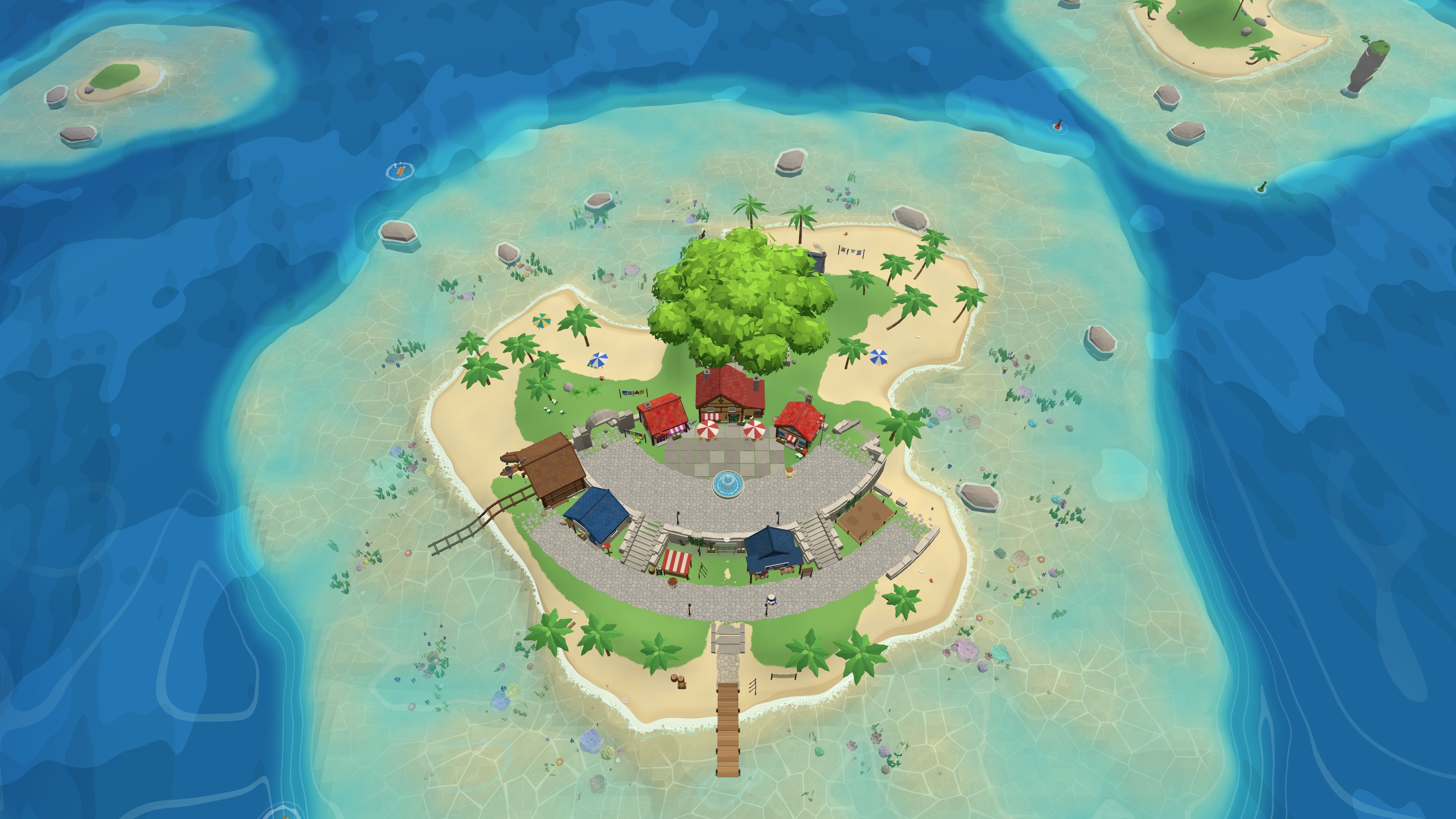
A Short Sail is a cozy sailing game where you are a little tabby cat with a sailboat. One island is your home, and you build it up, one plank at a time. From there, your sailboat takes you out to the islands, through sun, night and storms. There are no timers. You can try it in your browser with the free demo at play.ashortsail.com.
Developer: Yos Riady | Platforms: PC (Windows), Mac, Web, Steam Deck | Length: not shared yet | Free demo at play.ashortsail.com | Play the demo
Read next
Sources
- Tanya X. Short, Daniel Cook, Chelsea Howe, Jake Forbes and others, Coziness in Games: An Exploration of Safety, Softness, and Satisfied Needs, Project Horseshoe 2017, group report section 3. The source of the kinds of cozy places, the visual notes, refuge and escape, the Hyper Light Drifter campfire and the sleeping cat.
- Dave Tach, The Rise of Cozy Games, Epic Games Store, 24 November 2025. The source of the quotes by Tobias Schnackenberg and by Rob and John Donkin.
- Tanya Krzywinska and others, Coziness in Games: Second Homes, Audiences, and Esthetics, Games and Culture, 2025, and Agata Waszkiewicz and Marta Tymińska, Cozy Games and Resistance Through Care, Replay 11(1), 2024. The sources of “What research says”.
- Each game’s Steam page (linked in each entry), for the quotes from store text, and platforms and ratings.
- Game lengths are from HowLongToBeat, and platforms from Steam. Checked on 17 October 2026.
Questions
What makes a place in a game feel cozy?
It is small and enclosed, lit with warm light, made of natural things like wood and wool, and it asks nothing of you. A reminder of the cold or the rain outside makes it feel even safer.
What is a third space in a game?
A third space is a place that is not home and not work, like a café, a library or a garden. You go there to rest and to be near other people, with no job to do.
Why do boats and trains feel cozy?
They are transition spaces. You are going somewhere, but you have nothing to do on the way. Designers at Project Horseshoe list trains, the back seat of a car and slow spacecraft as cozy for that reason.
Can a dangerous place become cozy?
Yes. Once the danger is gone, a place can turn into somewhere to rest or celebrate. The Project Horseshoe report gives the example of an old boss arena that becomes a playground.
Why do inns and campfires in games feel cozy?
They are safe spots inside a bigger, riskier world. Researchers call this situational coziness. Krzywinska and colleagues point to the inns of World of Warcraft and the fireside camps of Baldur's Gate 3, and say that for many fans a game world becomes a second home.
Why does a game world feel like home?
Partly because you know it well. Krzywinska and colleagues (Games and Culture, 2025) say a game's predictability is part of what makes it cozy, like knowing the way around your own house in the dark.